Crop rotation is a planned sequence of crops grown in the same location over a period of time, according to the Natural Resources Conservation Service. The sequence can be designed to support soil health and to reduce plant pest pressures.
The practice sits within the broader guide to sustainable farming practices. This page covers what official sources say about planning a rotation, what it can and cannot do for pests and soil, and where the rules for organic production come in.
What crop rotation is meant to do
The NRCS conservation practice standard for conservation crop rotation, issued in July 2026, says a rotation must include a minimum of two different types or species, and that forages and cover crops are considered different crops when used in the rotation.
The same standard says the practice is applied to support one or more of a listed set of purposes. Those purposes include reducing sheet, rill and wind erosion, maintaining or increasing soil organic matter quantity, improving soil aggregate stability, improving soil moisture management, reducing plant pest pressures, and providing feed and forage for domestic livestock.
North Central SARE, in a crop rotation overview from 2013, describes the practice as an ancient one: growing a wide variety of crops in a sequential system throughout a field to avoid a buildup of disease and pests. That SARE overview predates the current NRCS standard.
The NRCS standard also says species can be selected using differences in life cycle or duration, the season grown, or plant family, such as legume, grass, forb, cereal, brassica and sunflower.
Rotation and pest management
Clemson University’s Home & Garden Information Center explains that rotating crops disrupts pathogens, insects and nematodes by removing the host required to complete their life cycle. Because pests may remain in the soil for quite some time waiting for their host, the Clemson fact sheet advises growing a crop in the same spot a maximum of once every three years. It adds that a three-year rotation is the minimum recommended, and that a four or five-year rotation will be even better at reducing the buildup of soil-borne pests. Clemson notes that its recommendations are for South Carolina conditions and may not apply to other areas.
The same Clemson page says that crops within the same family are often susceptible to many of the same pests, so a proper rotation should rotate plant families. Its example of beans, then tomatoes, then sweet corn includes three different plant families. Rotating tomatoes, peppers and eggplant is not recommended, because all three belong to the nightshade family (Solanaceae) and are susceptible to many of the same pests.
For farms, the NRCS standard asks planners to design the crop sequence to interrupt the pest’s life cycle, allow the use of effective suppression techniques, or provide habitat for beneficial organisms. It directs them to use land grant university or industry standards to determine a suitable sequence that takes into account plant-pest host associations, as the standard sets out. Monitoring and thresholds for specific pests are a separate subject, treated in the guide to integrated pest management.
Soil health, roots and nitrogen
For the purposes of improving soil organic matter quality and habitat for soil organisms, the NRCS standard asks for no less than four crop types adapted for the region and the rotation, to provide a supply of diverse soil organism food. For the organic matter quality purpose it also asks that fallow periods, or periods without living roots, be restricted to less than 25 percent of the available growing season.
Among its considerations, the standard recommends a diverse rotation with crops that have shallow, medium and deep roots, to maximize aggregate stability, to increase organic matter, and to improve water infiltration and soil structure. It says soil compaction can be reduced by adjusting rotations to include deep-rooting crops that penetrate compacted soil layers. North Central SARE makes a related point, saying strategic rotations can help promote good soil health by alternating crops with different nutrient needs, and can benefit soil structure by breaking up subsoil through alternating deep and shallow rooting plants.
On nitrogen, the NRCS standard lists as a general consideration the selection of crops that have the potential to provide larger amounts of biologically fixed nitrogen. For the aggregate stability, organic matter quality and soil organism purposes alike, it also calls for crops and a cropping sequence that allow minimal soil disturbance. Tillage choices are covered separately in the guide to no-till farming.
Erosion, water and nutrient use
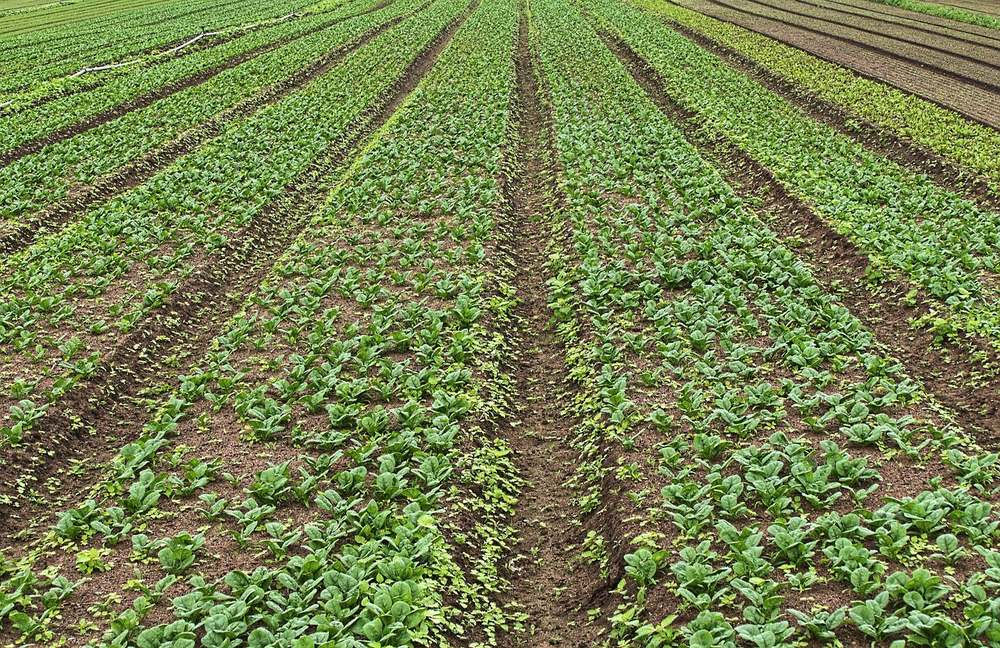
When the goal is to reduce erosion, the NRCS standard says to select crops that leave high amounts of residue or residue that is non-fragile. When designing a resource conserving rotation, it adds, planners select crops that will achieve soil conservation objectives by including a short-term perennial grass or grass-forb mixture.
For reducing water quality degradation by utilizing excessive soil nutrients, the same standard says to select plant materials that germinate quickly and form fast-growing root systems to depths sufficient for utilization of nutrients not used by the previous crop. It also says to maximize the time living roots are present in the soil profile throughout the rotation. In areas where moisture for crop growth is limited, it says to select crops that require less water to achieve the yield objective.
What the organic production rules say
The USDA National Organic Program’s regulation on the crop rotation practice standard, 7 CFR 205.205, states that the producer must implement a crop rotation including but not limited to sod, cover crops, green manure crops and catch crops. The rotation must provide the following functions that are applicable to the operation: maintain or improve soil organic matter content; provide for pest management in annual and perennial crops; manage deficient or excess plant nutrients; and provide erosion control.
Regulations can be amended, so the current wording on the Electronic Code of Federal Regulations is the version to read. This site is independent, is not a certifier, and does not provide certification or compliance advice.
Planning a sequence and keeping records
Clemson suggests keeping notes on which crops were planted, where and when they were planted, and any pest events noticed during the season. It also says the best way to ensure proper rotation is separate garden plots or beds, because moving soil between zones also moves nematodes and pathogens, negating the effects of crop rotation.
The fact sheet’s sample rotation moves four crops through four beds over four years, so that each crop returns to a bed only after every other crop has been grown there.
| Year | Bed A | Bed B | Bed C | Bed D |
|---|---|---|---|---|
| 1 | Tomatoes | Sweet corn | Okra | Beans |
| 2 | Sweet corn | Okra | Beans | Tomatoes |
| 3 | Okra | Beans | Tomatoes | Sweet corn |
| 4 | Beans | Tomatoes | Sweet corn | Okra |
This sample rotation is taken from the Clemson Home & Garden Information Center fact sheet, which is written for South Carolina gardens.
NRCS states that it reviews and periodically updates conservation practice standards. To obtain the current version, the standard directs readers to contact their NRCS State office or visit the Field Office Technical Guide online.
Where rotation falls short
Clemson cautions that rotation is not perfect. Some pests and diseases have an extensive host range, and Southern blight has been reported on over 500 different plant species, including tomatoes, peanuts, collards, strawberries and carrots, which belong to different plant families. The fact sheet also says rotation is only an effective management strategy for pests that are predominately confined to the soil, and that pathogens dispersed by wind-blown spores, or insects that over-winter on weeds, are largely unaffected by it.
Clemson advises researching the alternate plant hosts of the pests and diseases that affect the crops being grown. It also recommends keeping records of the pest events that occur in the garden and learning the life cycles of those pests.
Frequently asked questions
How long should a crop wait before returning to the same spot?
Clemson’s garden guidance says a crop should be grown in the same spot a maximum of once every three years, with four or five years being even better for soil-borne pests, as its fact sheet explains. The guidance is written for gardens.
Does a rotation have to include a cover crop?
The NRCS standard requires a minimum of two different types or species and counts cover crops and forages as different crops, so a cover crop can serve as one of them, per the standard.
Do organic rules require crop rotation?
The National Organic Program regulation at 7 CFR 205.205 says the producer must implement a crop rotation that provides the functions applicable to the operation, including pest management in annual and perennial crops.
Can rotation control every pest?
No. According to Clemson’s guidance, pathogens dispersed by wind-blown spores and insects that over-winter on weeds are largely unaffected by rotation, which is only an effective management strategy for pests that are predominately confined to the soil.