
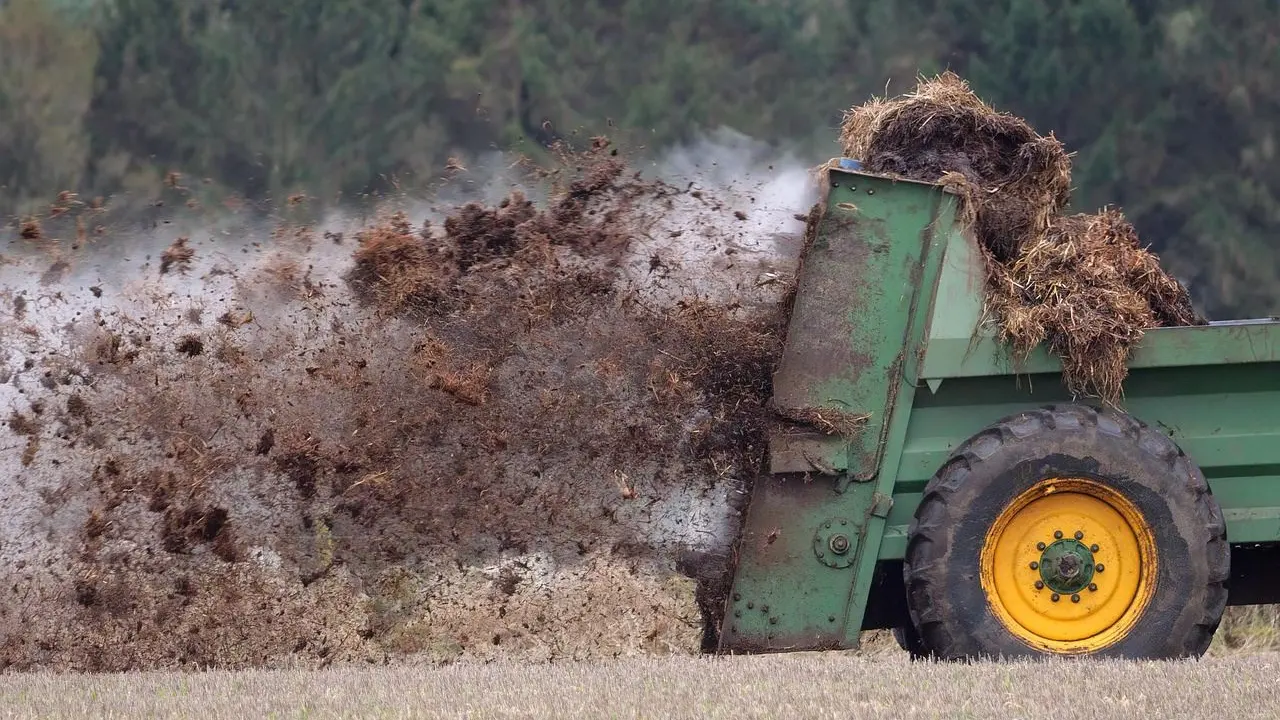
Manure management covers how livestock manure is stored, tested and applied so that its nutrients support crops with less loss to water and air. Planning decisions include storage design, manure analysis, and application timing, rate and placement.
It sits within the wider set of sustainable farming practices that protect soil, water and yields. This guide describes general information from agency and extension sources; it is not engineering, legal or safety advice for a particular farm.
Why manure nutrients need planning
The US EPA notes that farmers apply nutrients as chemical fertilizers and animal manure, which provide crops with the nitrogen and phosphorus necessary to grow. When those nutrients are not fully used by the growing plants, EPA says they can be lost from fields and affect air and downstream water quality. The agency adds that excess nitrogen and phosphorus can be washed into waterways during rain events and when snow melts, and can also leach through the soil and into groundwater over time.
According to the same EPA page, high levels of nitrogen and phosphorus can cause eutrophication of water bodies, and nitrogen can be lost from fields as gaseous compounds such as ammonia and nitrogen oxides. EPA states that applying fertilizers in the proper amount, at the right time of year and with the right method can significantly reduce how much fertilizer reaches water bodies, and its nutrient management advice covers both fertilizer and manure.
Storage is part of that planning. A Virginia Tech Extension publication says manure storage allows a strategic approach to application by giving livestock and poultry owners flexibility in scheduling when the nutrients in the manure are used. It also says adequate storage reduces the need for land application when weather and soil conditions are not favorable, such as during winter months when soil is saturated or frozen.
Storage types and where they are sited
The Virginia Tech publication (dated July 2024) explains that manure can be handled as liquid, slurry, semi-solid or solid, and that the share of solids and the preferred application method influence the storage system. Liquid systems use belowground tanks or pits, earthen storage ponds, and aboveground concrete or steel tanks, and manure with a solids content of less than 4 percent is best for pumping, according to that publication. Solid manure, with 20 percent to 25 percent or more solids, can be stacked and is best handled with a scraper and front-end loader.
The same publication states that uncovered semisolid and solid manure storages need containment for any accidental leaks or runoff from excessive rainfall. Its site guidelines advise against locating unlined storages over limestone, gravel or fractured bedrock, at or below the water table, or in sandy or gravel-like soils because these soils allow seepage to percolate through to the groundwater more easily. It also advises checking for buried utilities and drainage tiles before building, and recommends confirming local and state requirements with Extension, NRCS or the local soil and water conservation district.
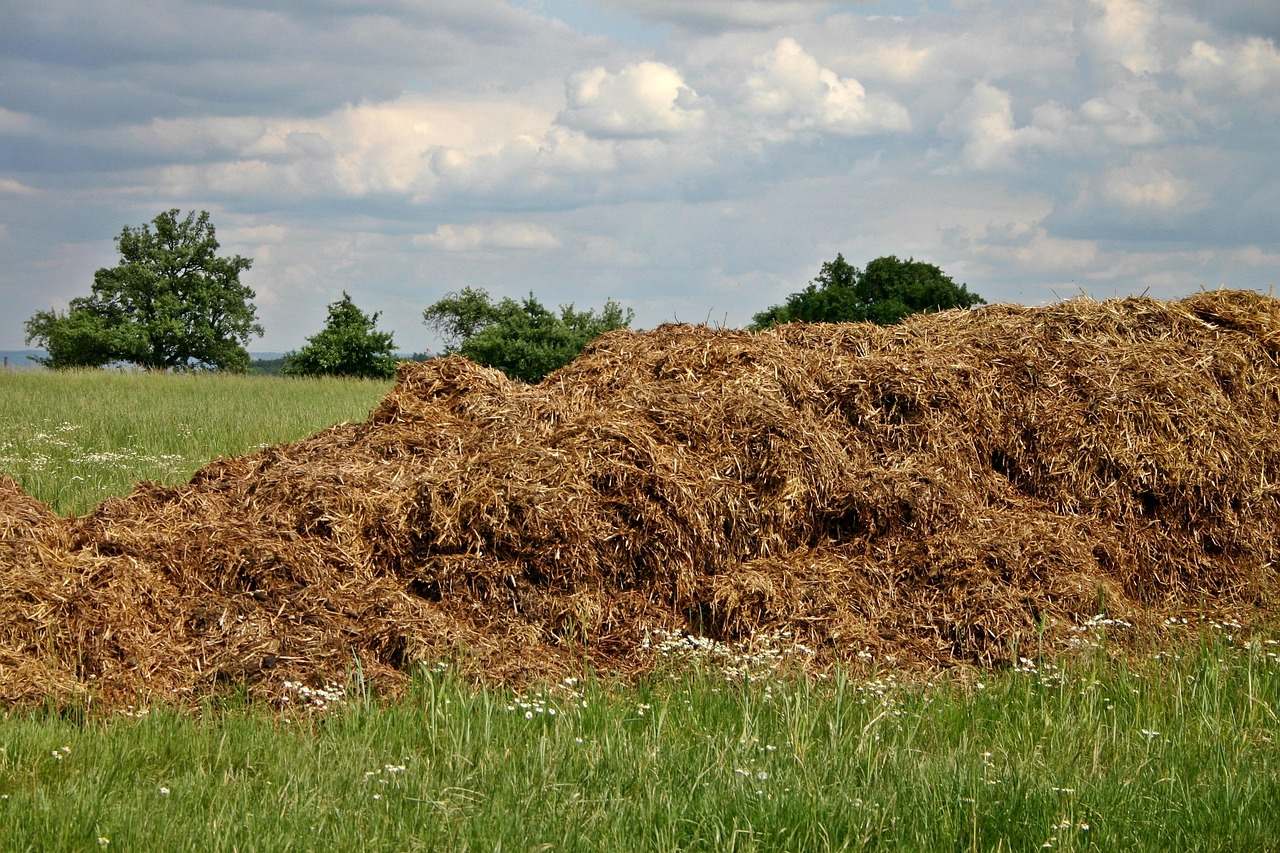
On storage period, the Virginia Tech publication defines it as the maximum length of time expected between emptying events, and gives a minimum of 120 days or whatever the storage needs to use the manure according to the nutrient management plan. That guidance comes from a Virginia publication, which also names six months as the optimal storage period, based on timing for environmentally safe manure use that considers climate, crops, soil, equipment, and local, state and federal regulations.
Safety around manure storage
Manure storages can release gases that endanger people and livestock. Cornell’s PRO-DAIRY announcement of a May 2026 technical guide quotes it as stating that hydrogen sulfide is generated naturally in anaerobic manure storage and is by far the most dangerous manure gas. The announcement also says the guide treats ventilation as critical but not a reason to reclassify a permit-required confined space.
An Ohio State University Extension column from 2021 states that pit gases from any storage pit, whether closed, open or under barn storage, can be toxic to both humans and livestock. It says hydrogen sulfide is released when manure is agitated and pumped, that the gas is heavier than air, and that methane and carbon monoxide are odorless and difficult to detect by smell. The column recommends gas monitors or multi-gas detectors for people working around pits, a buddy system, supplied-air or self-contained breathing equipment kept on hand, ventilation of enclosed barns while manure is stirred, lock-out and tag-out during maintenance, and fencing and signage around open pits to keep children, visitors and animals out. The column warns that hydrogen sulfide collects in low-lying areas without good air movement, that in the breathing area for people and animals it can be immediately dangerous to life and health, and that levels greater than 100 ppm will cause altered breathing, collapse and death.
A 2012 extension publication on confined-space hazards of manure gases lists entry precautions. Because the publication is dated, it is best read alongside the newer guidance above. It notes that most agricultural operations are not covered under OSHA regulations for confined-space entry, but that confined spaces exist in production agriculture and that it is vital that every person associated with the farm or ranch receive training on the hazards. Its steps for entering and working in a confined-space manure storage area include:
- Avoid entering confined-space manure storage areas if possible; if entry is unavoidable, understand the risks and have an entry plan that outlines the actions to take.
- Test the oxygen and the explosive and toxic gas levels from outside the storage area, and retest the air quality continuously during occupancy.
- Before entry and during occupancy, ventilate the manure storage area with a positive-pressure ventilation system, and before entry lock out all power sources other than that ventilation system to reduce the risk of stray electricity.
- Wear an adjustable body harness with a lifeline attached to a rescue and retrieval system, and carry a portable gas monitor.
- Assign a second person to remain outside the storage area in case that person must implement the rescue and retrieval system or get additional assistance, and maintain verbal and visual contact with the person outside; the person outside should not enter the area, even in the event of an emergency.
- Operate manure agitators below the surface of liquid manure to reduce the release of manure gases, prohibit smoking in and around storage areas, and post warning signs on or near all manure storage locations.
- Restrict access to confined spaces to authorized individuals, remove temporary access ladders and restrict access to permanent ladders, and be aware that people and animals may need to vacate the confinement building during manure storage agitation or pumping.
The same publication states that youth under the age of 16 are prohibited from working in confined spaces. It adds that hydrogen sulfide smells like rotten eggs at low levels but can overcome a person’s sense of smell at levels of 100 ppm and higher, and that exposure to hydrogen sulfide can cause eye and nose irritation, headache, nausea, and death (after prolonged exposure).
Testing manure for nutrient content
A Penn State Extension fact sheet last updated in November 2014 states that, unlike fertilizer, manure form and composition, and therefore nutrient analysis, can vary widely. It describes manure test results, combined with soil test recommendations and spreader calibration, as the basis for determining application rates that meet crop nutrient needs.
The fact sheet says book values can serve as a starting point for estimating initial application rates when test results are not yet available, but that book values or averages seldom reflect the actual nutrient content of manure from a specific farm. It attributes farm-to-farm variation to diet and feeding programs, type and amount of bedding, the amount of rain or wash water added, manure handling, and manure storage.
On sampling, the Penn State fact sheet says collecting a representative sample is the single most important factor affecting accuracy, and names loading or field application as the best time to sample. It notes the drawback that results from samples collected while spreading are not available for calculating rates for that application. It recommends basing rates on running averages or baseline values, with each manure group sampled annually for three to five years, and resampling if feeding programs or manure storage and handling change. The fact sheet also cautions that some states have their own regulatory requirements for manure sampling.
The text of 40 CFR 412.4 applies to CAFOs subject to subpart C (dairy and beef cattle other than veal calves) or subpart D (swine, poultry and veal calves) of 40 CFR part 412. For those CAFOs that land-apply manure, litter or process wastewater, it requires manure to be analyzed a minimum of once annually for nitrogen and phosphorus content, and soil to be analyzed a minimum of once every five years for phosphorus content, with the results used in determining application rates.
Planning when, where and how much to apply
Nebraska Extension advises in a 2023 CropWatch article that one of the key rules of manure management is to pump and spread whenever weather and field conditions allow, so storage capacity is maintained in case of inclement weather. It says it is best practice to apply manure outside of winter when the soil is dry, and that application should generally be avoided when fields are snow covered. For farms heading into winter with a storage that has not been pumped down as much as it needs to be, it suggests avoiding fields with slopes if possible, considering more level ground well away from ditches or water bodies, and trying to apply on ground with at least 30% crop residue cover, which it says reduces the chances of manure runoff during heavy precipitation events and snowmelt. Where application cannot be avoided when soil is frozen or snow-covered, it says it is critical to recognize the runoff risks associated with solid vs. liquid manures before making application decisions. It also says planting cover crops in fields used for manure application reduces the risk of nutrient runoff losses.
That advice comes from a single state’s extension service, and state requirements may differ.
For the same subpart C and D CAFOs that land-apply manure, litter or process wastewater, 40 CFR 412.4 requires a nutrient management plan that addresses the form, source, amount, timing and method of application of nutrients on each field, based on a field-specific assessment of potential nitrogen and phosphorus transport. The same section prohibits applying manure, litter and process wastewater closer than 100 feet to down-gradient surface waters, open tile line intake structures, sinkholes, agricultural well heads or other conduits to surface waters, with compliance alternatives that include a 35-foot wide vegetated buffer or demonstrating that alternative practices give equivalent or better pollutant reductions. It also requires the operator to periodically inspect land application equipment for leaks.
Organic production and regulations to confirm
Under the National Organic Program text at 7 CFR 205.203, raw animal manure must be composted unless it is applied to land used for a crop not intended for human consumption; incorporated into the soil not less than 120 days before harvest of a product whose edible portion has direct contact with the soil surface or soil particles; or incorporated into the soil not less than 90 days before harvest of a product whose edible portion does not have direct contact with the soil surface or soil particles. The same section lists composted plant and animal materials as those produced through a process that established an initial C:N ratio of between 25:1 and 40:1, and maintained a temperature of between 131 °F and 170 °F for 3 days using an in-vessel or static aerated pile system, or for 15 days using a windrow composting system, during which period the materials must be turned a minimum of five times. The section also requires that plant and animal materials be managed so they do not contribute to contamination of crops, soil or water by plant nutrients, pathogenic organisms, heavy metals or residues of prohibited substances.
Rules are revised over time and state requirements can differ, so the current text of 40 CFR 412.4 and 7 CFR 205.203, along with the state permitting authority and a certifier where one applies, sets what a given operation must do.
Related whole-farm topics include integrated pest management, which covers pest decisions on farms, and agroforestry, which covers growing trees, crops and livestock together.
Frequently asked questions
Why test manure instead of using published average values?
The Penn State fact sheet cited above says averages seldom match what a specific farm produces, because diet, bedding, added water, handling and storage all change the nutrient content. Testing is how farm-specific values are obtained.
Which gas is the main hazard in manure storage?
Cornell’s PRO-DAIRY guide, as quoted in its announcement, identifies hydrogen sulfide as by far the most dangerous manure gas. The Ohio State column adds that it is heavier than air and is released when manure is agitated and pumped.
How long before harvest can raw manure be used on a certified organic farm?
The NOP text in 7 CFR 205.203 sets conditions by crop type, including incorporation not less than 120 days before harvest where the edible portion touches the soil and not less than 90 days where it does not. A certifier can confirm how that applies to a specific operation.
What does storage change about application timing?
Virginia Tech Extension says storage reduces the need to spread when soil is saturated or frozen, so application can be scheduled for times that suit crops and soil conditions.