No-till farming is a system in which crops are planted directly into undisturbed soil, without tilling or other seedbed preparation. The USDA Economic Research Service uses that definition, and Nebraska extension guidance describes the seed going into soil that stays covered with residue.
This guide covers the practice’s documented benefits, its trade-offs and what a move away from tillage involves, as one part of wider sustainable farming practices.
No-till farming defined
The USDA Economic Research Service describes no-till as a conservation practice in which crops are planted directly into undisturbed soil, without prior tilling or soil preparation. Its soil tillage topic page places it at one end of a range: no-till is generally the least intensive form of tillage, conventional tillage is the most intensive, and reduced till has fewer tillage passes or less soil disturbance than conventional tillage.
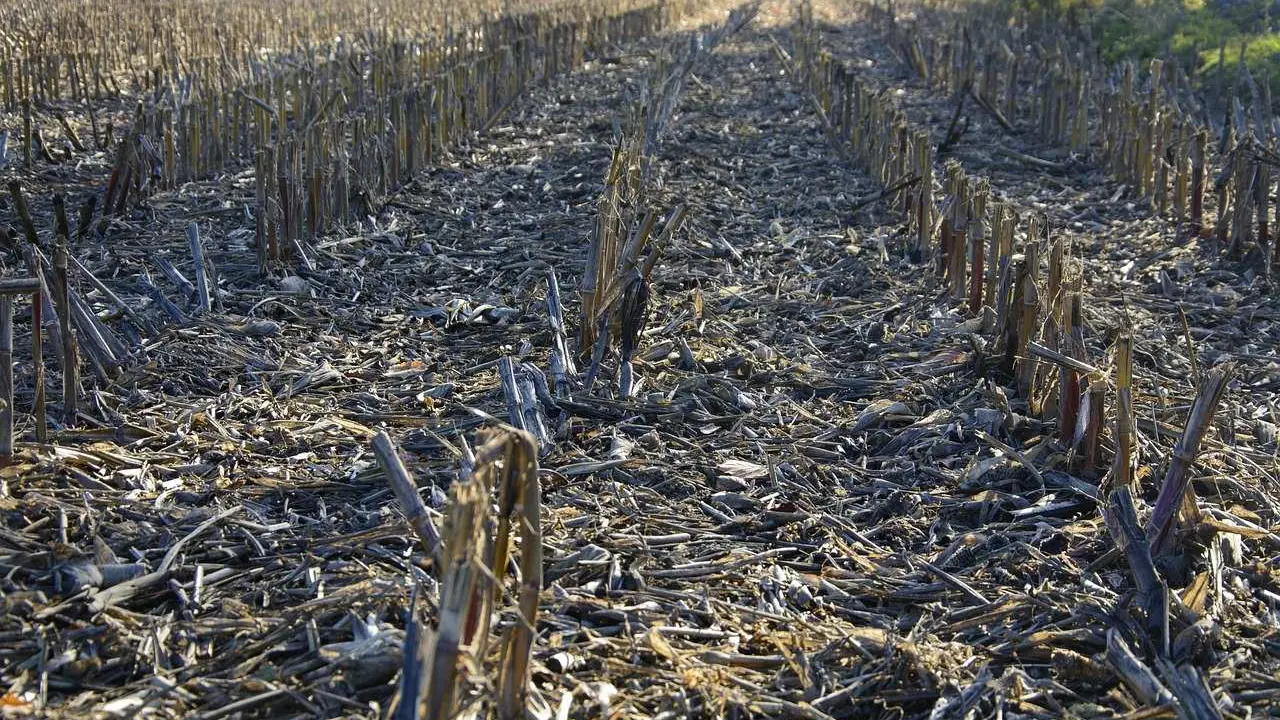
In the field, University of Nebraska–Lincoln extension describes the seed going into a narrow strip opened with a coulter, disk seed-furrow opener or hoe opener, and notes that most planters can be used in no-till systems with little or no modification. Only a narrow slot of the residue-covered soil is disturbed.
Adoption of no-till farming in the United States
Survey data summarised by the Economic Research Service show that the combined share of wheat acreage under no-till and reduced till increased from 21 percent in 1998 to 69 percent in 2022. The same source reports that the share of acreage under no-till increased each survey year for corn, while shares have leveled off for cotton and wheat and have been variable for soybeans.
The agency also ties part of that history to weed control. The introduction of herbicide-tolerant field crops initially contributed to no-till adoption, but the increased prevalence of herbicide-resistant weeds, such as water hemp, giant ragweed and palmer amaranth, has been one factor contributing to tillage decisions for these crops over time. The figures cover major commodity crops in the United States and do not describe farms elsewhere.
Effects of leaving residue on the surface
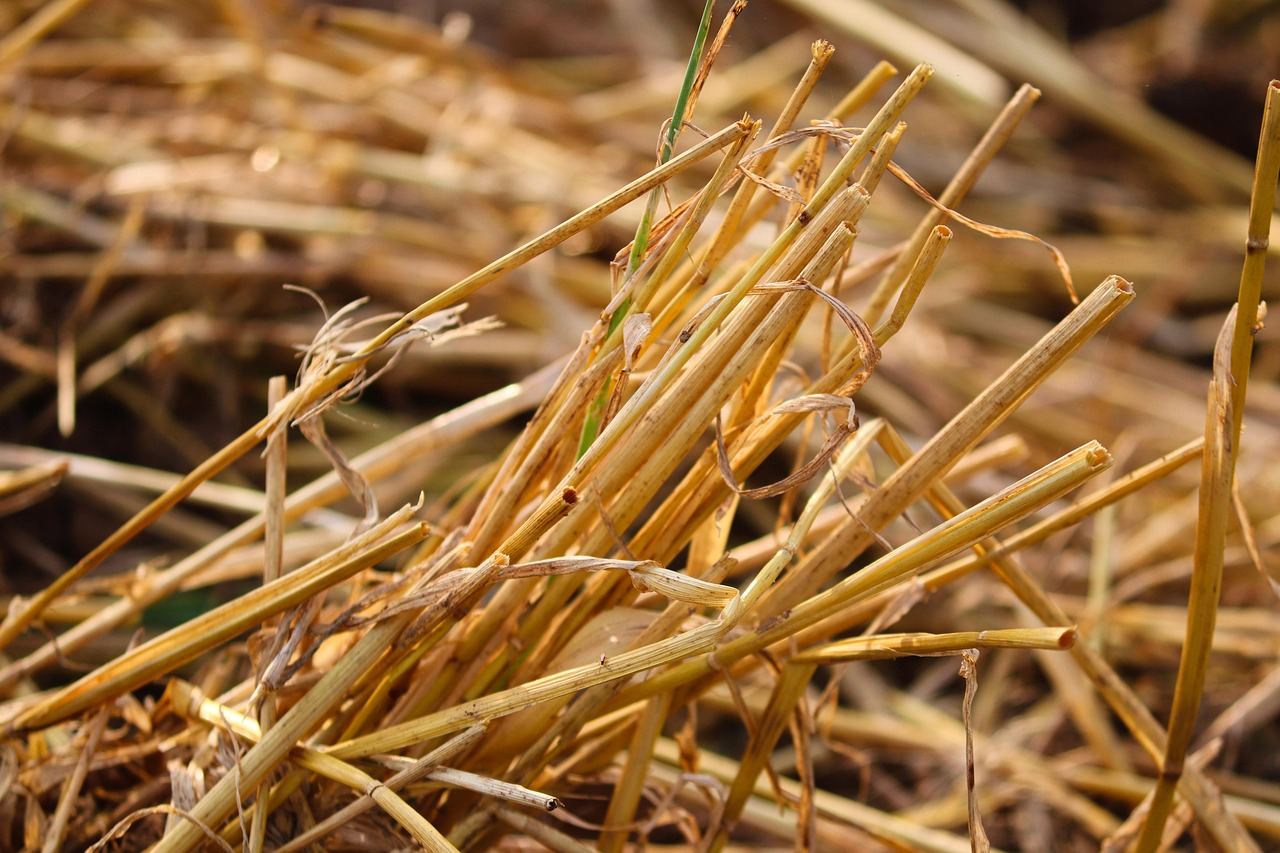
Nebraska extension introduces its list of the advantages of no-till by tying them to leaving crop residues on the soil surface. The residue absorbs the energy of raindrop impact, which reduces soil erosion and crusting. It keeps wind off the soil surface, and it captures snowfall, adding soil moisture and reducing drifting on roads. It also acts as a mulch that reduces soil moisture evaporation, and it feeds the soil system as it decays naturally. The same page lists savings in fuel and labor, and lower equipment costs, from not tilling.
A separate Nebraska page adds that residue, when uniformly spread, increases water infiltration and reduces soil moisture evaporation.
In its guidance on growing soybeans in Ohio without tillage, Ohio State University Extension states that keeping crop residue on the soil surface reduces soil crusting, and adds that no-till systems do not bury weed seeds, reducing the germination potentials of some species, particularly large-seeded broadleaf weeds.
On the broader environmental side, the Economic Research Service states that intensive soil tillage can increase the likelihood of soil erosion, nutrient runoff into nearby waterways and the release of greenhouse gases into the atmosphere. It adds that reducing how often or how intensively cropland is tilled enables the soil to retain more organic matter. That statement concerns reductions in tillage in general, not no-till alone.
Trade-offs: cold soils, wet soils and weeds
The same residue that protects the surface changes conditions at planting. Nebraska extension notes that using no-till in poorly drained soils covered with large amounts of residue delays soil warming and drying in the early spring, which delays germination and emergence. Ohio State University Extension makes a similar point for soybeans, stating that cooler soil temperatures slow germination, emergence and early growth, and that root rot diseases are much more severe in a wetter and cooler soil environment. Its soybean guidance is that no-till is not advised for poorly drained fields.
Residue can also affect the planting pass itself. Nebraska extension advises not to shred standing residue before planting, because planters, drills and cultivators perform better when residue is standing and attached to the soil than when it is unattached and lying flat. Separately, in the same Ohio soybean guidance, Ohio State University Extension reports that heavy crop residue and more dense soil can interfere with proper seeder function and lead to poor distribution, poor placement of seed and lack of adequate depth control. For cold, wet conditions with early planting dates, Nebraska extension points to planter attachments designed to move residue, but not soil, away from the row, and to fall strip-till as a possible alternative.
Weed control is covered separately. Nebraska extension states that no-till requires surface application of preemerge or postemerge herbicides for weed control. Herbicide products carry their own label directions on rates, timing and restrictions, which apply to any use.
Residue handling at harvest also matters. For no-till soybeans in Ohio, Ohio State University Extension states that spreading crop residue evenly when harvesting will help keep the field surface uniformly covered with residue and at uniform moisture, so the entire field is ready to plant at the same time.
Making the switch: a system, not a single step
Nebraska extension stresses that practicing no-till is far more than planting a crop without tillage. The page describes a systems approach in which crops are grown with minimal soil disturbance and the soil is kept covered with residue to reduce erosion, runoff and soil moisture evaporation. Residue management, crop rotation, nutrient management, integrated pest management, equipment and its proper operation, and many other cropping practices must be part of that approach.
Rotation is named explicitly in that list, and the site has a separate guide to planned crop rotation sequences. A guide to cover crops covers a related practice that the Economic Research Service discusses alongside rotation, describing cover crops as unharvested winter crops grown primarily for their soil health and environmental effects.
On results, Ohio State University Extension states that growing soybeans in Ohio without tillage has become both practical and profitable, and often reduces or eliminates some tillage related problems, and that the time saved by eliminating tillage can be invested in earlier and more careful planting or in planting more acres. That statement applies to Ohio soybean production and should not be read as a general result for other crops or regions. A local extension office can advise on conditions for a particular field.
Frequently asked questions
What is the difference between no-till and reduced till?
According to the Economic Research Service, no-till refrains from any form of tillage during a crop year, while reduced till involves fewer passes or less soil disturbance than conventional tillage.
Does no-till farming need herbicides?
Nebraska extension states that the system requires surface application of preemerge or postemerge herbicides for weed control. Any herbicide use should follow the product label and local extension recommendations.
Is no-till suitable for every field?
In its guidance on no-till soybeans in Ohio, Ohio State University Extension states that no-till is not advised for poorly drained fields, and Nebraska extension notes that large amounts of residue on poorly drained soils delay early spring warming and drying.
Does no-till need special equipment?
Nebraska extension reports that most planters can be used with little or no modification, and names common attachments such as coulters, stronger down pressure springs and extra weight for better penetration.