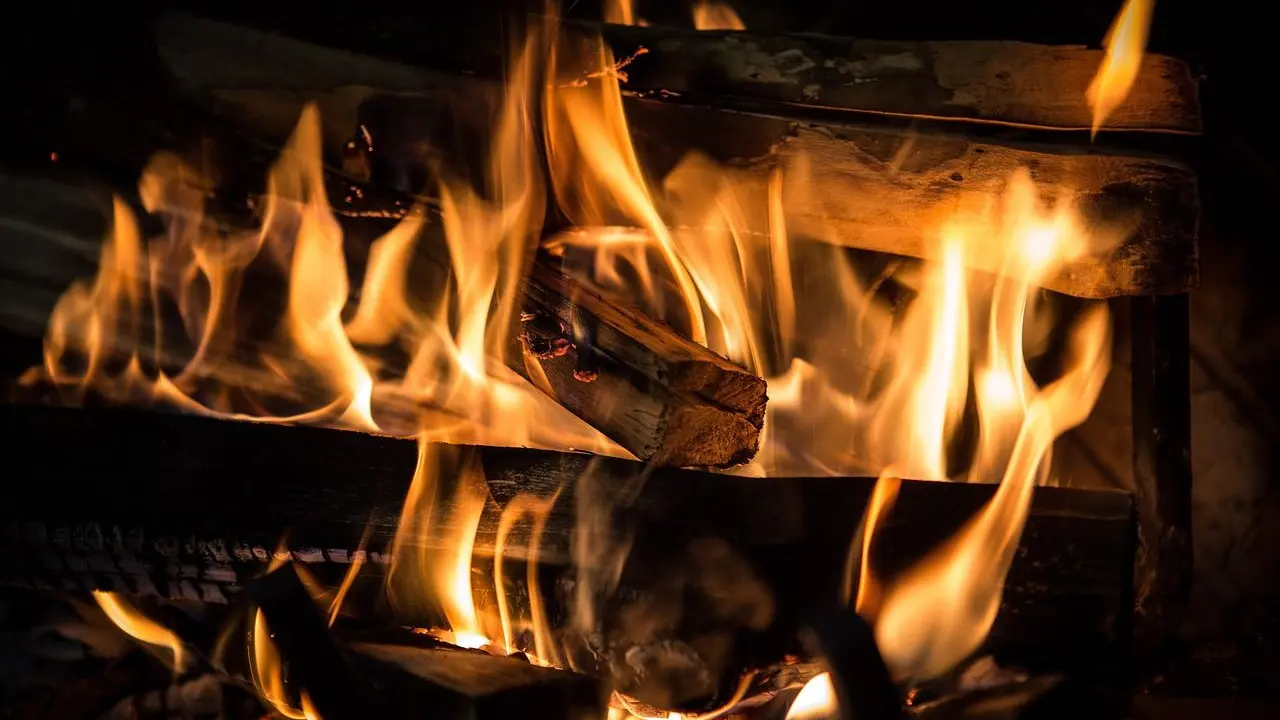
Biomass heating is the direct burning of renewable organic material, such as firewood or compressed wood pellets, to heat buildings and water.
It is one practical branch of the wider field described in the guide to algae biomass energy, which looks at how plants, algae and waste become fuel.
What biomass heating actually means
The US Energy Information Administration (EIA) describes biomass as renewable organic material that comes from plants and animals. It can be burned directly for heat or converted into liquid and gaseous fuels. According to the agency, direct combustion is the most common way of converting biomass into useful energy, and all biomass can be burned directly for heating buildings and water, for industrial process heat and for generating electricity in steam turbines.
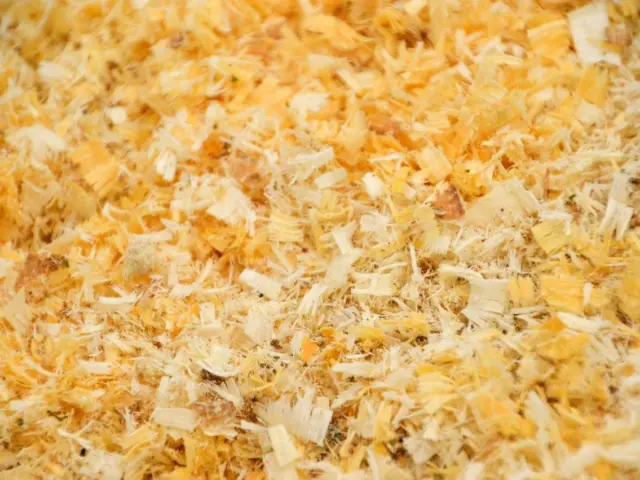
For heating, wood is the familiar fuel. EIA lists firewood, wood pellets and wood chips among the wood-based sources, alongside sawdust and waste from lumber and furniture mills. Across the economy, the same page reports that biomass accounted for about 5% of US total primary energy consumption in 2025.
Fuels: logs, pellets and other forms
Most household biomass heating uses one of two wood fuels. The EIA page on wood and wood waste explains that homes burn cord wood in fireplaces and wood-burning appliances, and burn pellets in pellet stoves.
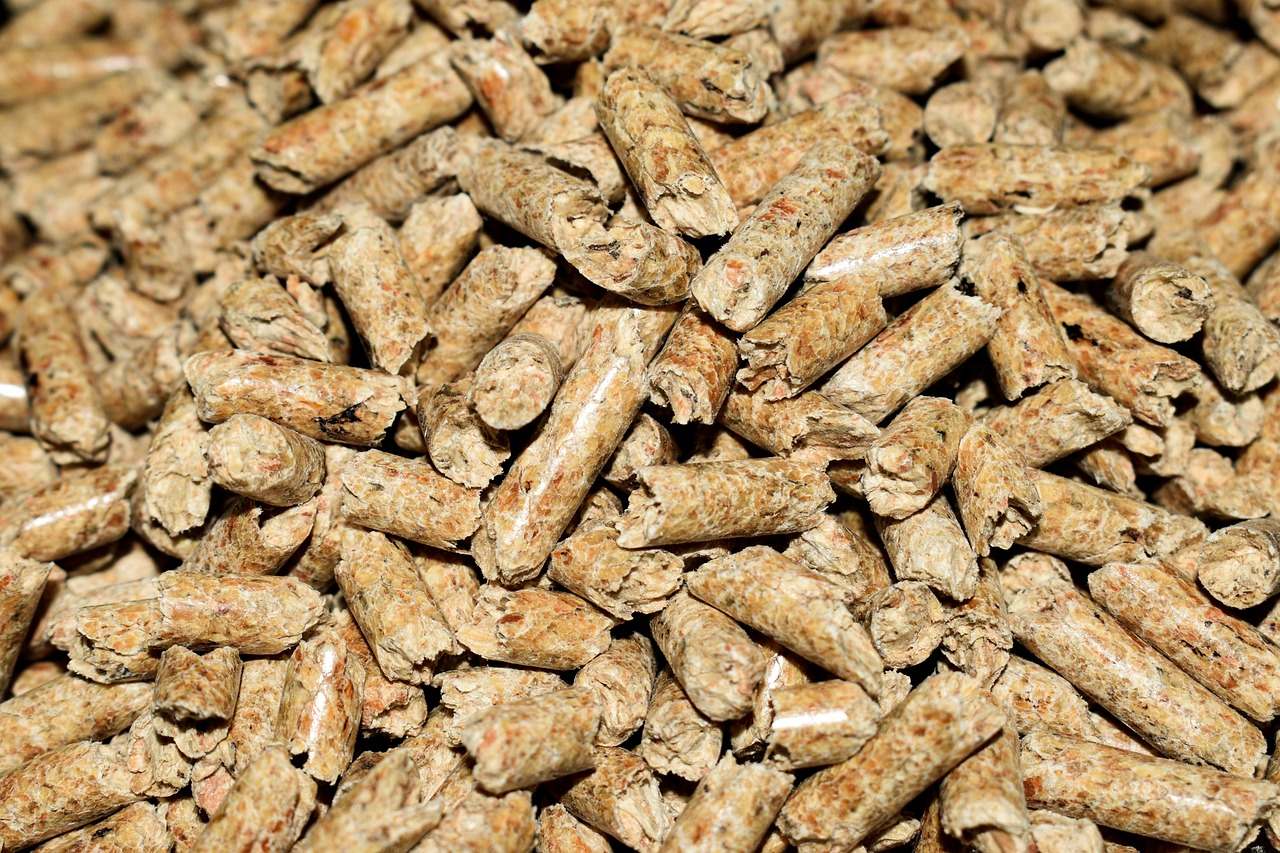
Pellets are the more engineered of the two. According to the US Environmental Protection Agency (EPA) pellet stove guidance, pellets are normally manufactured from wood and byproducts such as sawdust, wood chips, paper and bark, and they are made very dense, which helps them burn very hot and clean. This page and the other EPA pages cited here belong to the Burn Wise program, which EPA says ran from 2009 to 2025; the website serves as a historic record, and EPA stopped updating its content on October 30, 2025. EPA adds that pellets can differ significantly in how well they are made and burn: lower quality pellets may provide less heat and create a fine dust, while higher quality pellets tend to burn cleaner and produce less ash.
The same EPA page notes that some pellet stoves accept only wood-sourced pellets, while others can burn other biofuels such as corn or nutshells. It also points out that, in the United States, a third-party accreditation from the PFI Standards Program lets pellet stove users identify consistent, reliable pellets, and that other pellet certification programs include ENplus and CANPlus. Many pellet stove manufacturers recommend using only pellets from qualified producers.
How pellet stoves and wood stoves differ
EPA describes pellet stoves as looking similar to wood stoves but typically being cleaner and more efficient. Pellets are poured into a hopper, which feeds them automatically into the stove, and a unit can supplement an existing home heating system or serve as the sole heat source. Freestanding stoves vent through an external wall or ceiling, while inserts can use an existing chimney, and some stoves are top-fed while others are bottom-fed. Of the available biomass technologies, the agency says pellet stoves are among the easiest to operate and maintain, with less hauling and no cutting, splitting, stacking or waiting for wood to dry.
The trade-off is power. EPA states that pellet stoves need an electrical supply because they use motorized components to feed the fire and blow out hot air. Backup batteries are available for some models, and gravity-fed stoves, which are less common, do not need electricity to provide heat.
On performance, EPA reports that certified pellet stoves usually fall into the 70-83% efficiency range, with heating capacities of 8,000-90,000 Btu per hour.
Wood stoves meet emission limits in two general ways. The EPA guide to choosing a wood-burning stove says non-catalytic stoves rely on firebox insulation, a large baffle and pre-heated combustion air for complete combustion. Catalytic stoves pass smoky exhaust through a coated ceramic honeycomb where smoke gases and particles ignite and burn. The honeycomb degrades over time and must be replaced, and the same guide describes catalytic stoves as slightly more complicated to operate. Stove size also varies, from small units suited to a family room or seasonal cottage to large ones for open-plan houses or leakier houses in colder climate zones.
Emissions, smoke and air quality
Burning wood is not emission-free. EIA states that wood smoke contains harmful pollutants such as carbon monoxide and particulate matter, and that modern wood-burning stoves, pellet stoves and fireplace inserts can reduce the particulates released from burning wood (EIA biomass and the environment).
For stoves, EPA says older uncertified stoves release 15 to 30 grams of smoke per hour, and that Step 2 of the revised standards for wood-burning room heaters, in effect from May 15, 2020, lowered the mandatory limit to 2.0 g/h, with heaters tested by the optional cord wood method held to 2.5 g/h. EPA advises looking for the certification label on the back of a stove, and also checking for safety labelling by the Underwriters’ Laboratories of Canada (ULC) or another testing and certification body (EPA stove guidance). For pellet stoves, the agency says that if used correctly they produce very little smoke or creosote, which it identifies as the main cause of chimney fires.
On upkeep, EPA says pellet stoves need to be cleaned regularly to run efficiently and safely, and that a stove should be professionally cleaned at least once a year, with the owner’s manual consulted for best maintenance practices (EPA pellet stove page). EPA’s wood stove guidance also states plainly that garbage should never be burned in a wood stove or fireplace.
Because the Burn Wise pages are no longer updated, current appliance rules and local air-quality requirements should be confirmed with the relevant authorities.
Carbon and fuel sourcing
EIA notes that burning either fossil fuels or biomass releases carbon dioxide. It adds that the source plants for biomass capture almost as much carbon dioxide through photosynthesis as is released when biomass is burned, and for that reason the agency treats biomass as a carbon-neutral energy source. It also says that using wood, wood pellets and charcoal for heating and cooking in place of fossil fuels could result in lower carbon dioxide emissions overall (EIA).
Sourcing still matters. In the same discussion, EIA says wood can come from forests, woodlots that must be thinned, or urban trees that fall or must be cut down, and that wood and charcoal are major cooking and heating fuels in low-income countries, where harvesting wood faster than trees can grow causes deforestation.
Where wood heating fits in the United States
In its survey data, EIA reports that 8.9% of all US households, about 11 million, used wood for energy in 2020, mostly for space heating, and that about 2.2 million households used wood as the main space-heating fuel. The residential sector is the second-highest consumer of wood for energy, behind industry, which accounted for about 68% of total US consumption of wood and wood waste in 2025.
The US Department of Energy describes a new generation of wood- and pellet-burning appliances that are cleaner burning, more efficient and powerful enough to heat many average-sized modern homes (DOE home upgrades page). Programme rules and incentives for such appliances change, so check official DOE and EPA sources for current details before relying on any summary.
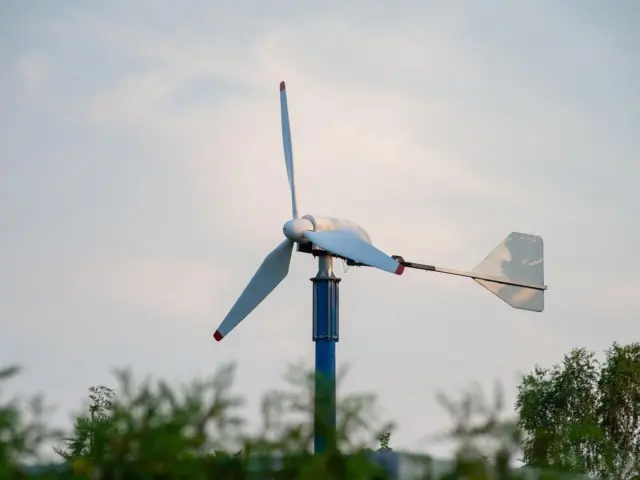
Biomass heating also sits beside other renewable options. Larger installations that produce both heat and electricity are covered under biomass combined heat and power, while small wind turbines generate electricity rather than heat.
Frequently asked questions
Do pellet stoves work during a power outage?
Most do not. EPA states that pellet stoves need an electrical supply because of their motorized feed and fan components, although some models can use backup batteries and gravity-fed stoves do not need electricity (EPA).
What are wood pellets made from?
EPA says pellets are normally manufactured from wood and byproducts such as sawdust, wood chips, paper and bark, compressed so they are very dense (EPA).
Is biomass heating carbon neutral?
EIA treats biomass as a carbon-neutral energy source because the source plants capture almost as much carbon dioxide as burning releases, but it also notes that harvesting wood faster than trees can grow causes deforestation (EIA).
Does burning wood pollute the air?
It can. EIA states that wood smoke contains harmful pollutants such as carbon monoxide and particulate matter, though modern stoves can reduce particulates (EIA).
How common is wood heating in US homes?
EIA reports that about 2.2 million US households used wood as their main space-heating fuel in 2020 (EIA).