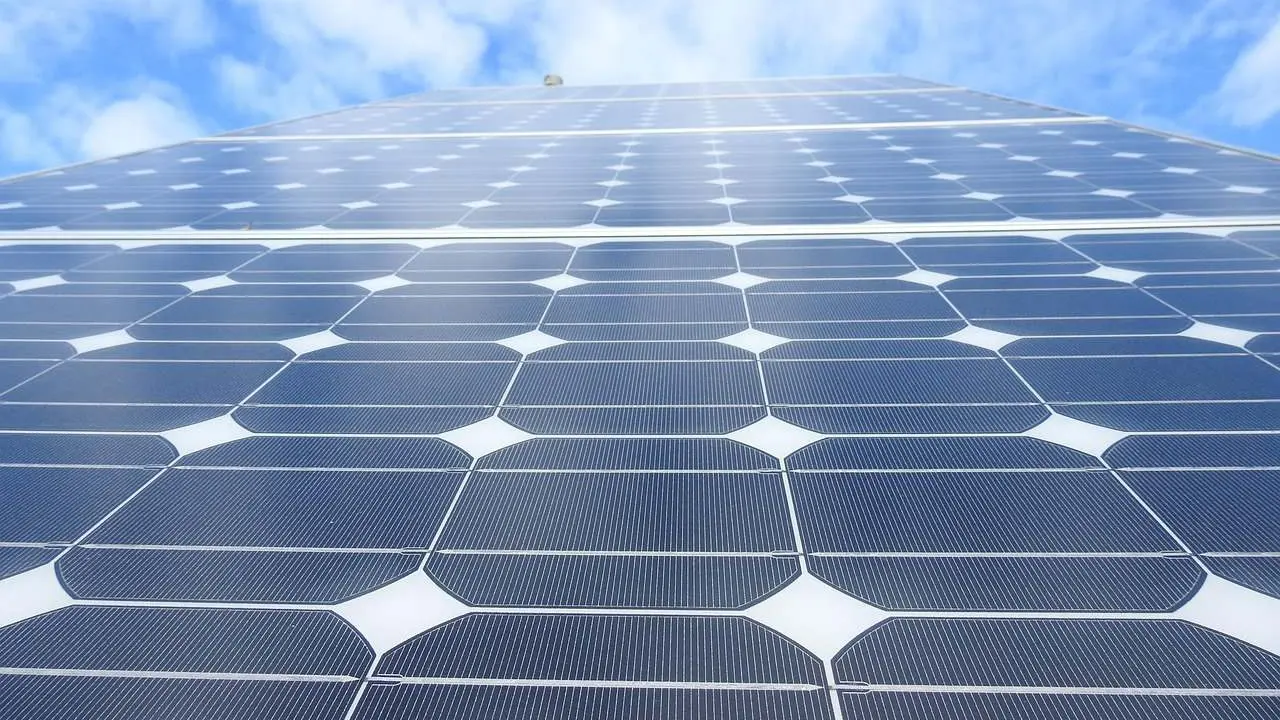
How solar panels work comes down to the photovoltaic effect: light absorbed by a semiconductor frees electrons, an internal electrical field moves them, and the result is direct current electricity.
For the biological side of renewable power, see the overview of algae biomass energy.
From sunlight to a flow of electrons
The US Energy Information Administration describes a photovoltaic cell, commonly called a solar cell, as a nonmechanical device that converts sunlight directly into electricity. Sunlight is made of photons, particles of solar energy that carry different amounts of energy depending on their wavelength, and the cell itself is made of a semiconductor material.
When photons strike the cell, they can reflect off it, pass through it, or be absorbed by the semiconductor. According to the same EIA page, only the photons that are absorbed provide energy to generate electricity. When the material absorbs enough sunlight, electrons are dislodged from the material’s atoms.
The US Department of Energy summarises the next step: energy from the sunlight is absorbed by the cells in the panel, and that energy creates electrical charges that move in response to an internal electrical field in the cell, causing electricity to flow. The surface of the cell is treated during manufacturing so that the freed electrons migrate toward the front. That movement leaves an imbalance of charge between the front and back surfaces, which works like the terminals of a battery. Conductors on the cell collect the electrons, and when they are connected to an external load, current flows through the circuit.
Cells, modules and arrays
The cell is the basic building block, but it is small. The EIA notes that individual cells can vary from 0.5 inches to about 4.0 inches across, and that a single cell can only produce 1 or 2 Watts, enough for small uses such as calculators or wristwatches. Cells are therefore electrically connected inside a packaged, weather-tight panel, also called a module.
The Department of Energy describes a solar module, the thing most people call a solar panel, as several small solar cells wired together inside a protective casing. Aluminum framing is typically used around the edges of the module for further reinforcement. Electricity-generating capacity rises with the number of cells or the surface area of the panel, and panels can be connected in groups to form an array. The number of panels in an array sets how much electricity it can generate.
Why silicon dominates
In a silicon solar cell, a layer of silicon absorbs light and excites electrons. The DOE reports that monocrystalline silicon represented 96% of global solar shipments in 2022, which makes it the most common absorber material in today’s modules, as set out on its crystalline silicon research page. The remaining share consists of other materials, mostly cadmium telluride.
The same page outlines how such a module is made. Mined quartz is purified into solar-grade silicon, and cylindrical monocrystalline silicon ingots are pulled out of a vat of molten silicon. Diamond-wire saws slice the ingots into thin wafers, which are processed into cells. Anti-reflection coatings are deposited on the front surface and electrical contacts are added so electricity can flow. Finished cells are connected and layered onto glass and plastic sheets for protection from outdoor conditions.
Cell designs keep changing. The DOE explains that passivated emitter rear contact designs overtook older aluminum back surface field cells because of superior efficiency, and that a further move toward n-type technologies is also driven by efficiency improvements. In interdigitated back contact cells, all the metal contacts to the silicon cell are placed on the back surface, so no light is blocked by metal on the front.
What the inverter does
A cell produces direct current. The Department of Energy’s inverter page explains that an inverter converts direct current electricity, which is what a solar panel generates, to alternating current electricity, which the electrical grid uses. It does this by switching the direction of a direct current input back and forth very rapidly, and filters and other electronics can shape the output into a clean, repeating sine wave. Today the switches are transistors, solid-state devices with no moving parts.
In a household system, the inverter often does more than conversion. The DOE notes that it can monitor the system and provide a portal for communication with computer networks, and that solar-plus-battery storage systems rely on advanced inverters to operate without any support from the grid during outages, if they are designed to do so. As more solar systems join the grid, the same page says the grid needs smarter inverters that can respond to changes in frequency and other disruptions.
Solar is not the only source that can supply a building. Readers comparing on-site options can also read about small wind turbines, which generate electricity by a different mechanism.
Efficiency and what limits it
Conversion efficiency is the percentage of the solar energy shining on a photovoltaic device that is converted into usable electricity, according to the DOE’s performance and efficiency page. The page adds that not all of the sunlight reaching a cell is converted, and that most of it is lost. Photons may be reflected or pass straight through, some absorbed photons have their energy turned into heat, and electrons can recombine with holes, cancelling their contribution to the current.
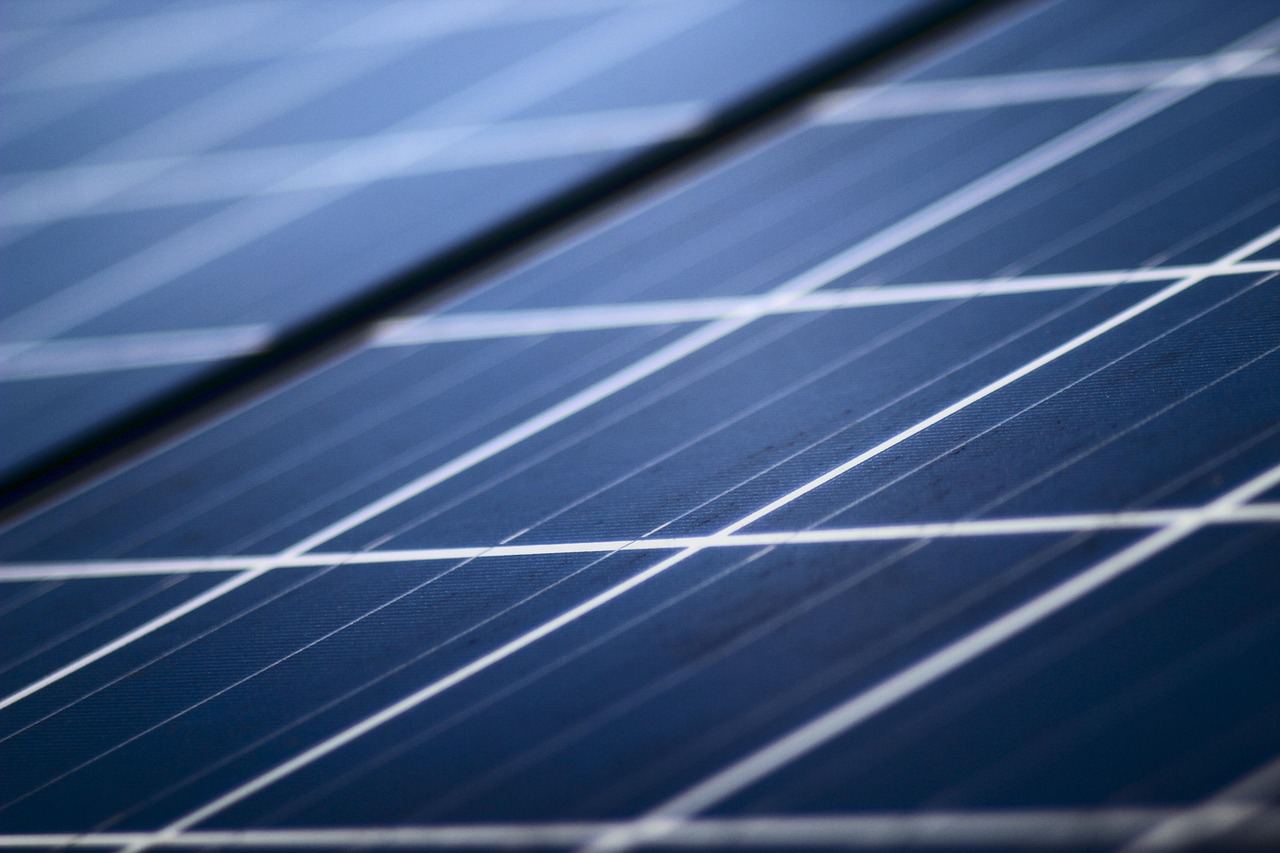
Temperature matters as well: solar cells generally work best at low temperatures, per the same page. Reflection is another loss, and untreated silicon reflects more than 30% of incident light, which is why anti-reflection coatings and textured surfaces are used. A high-efficiency cell will appear dark blue or black.
The EIA’s photovoltaics overview says the efficiency of commercially available panels averaged less than 10% in the mid-1980s, increased to around 15% by 2015, and is now approaching 25% for state-of-the art modules. The DOE’s silicon page separates laboratory and field results: monocrystalline silicon cells can have energy conversion efficiencies higher than 27% in ideal laboratory conditions, while industrially produced modules currently achieve real-world efficiencies ranging from 20%–22%.
Orientation, storage and the wider picture
According to the EIA, cells and panels produce the most electricity when they are directly facing the sun. Tracking systems can keep panels facing the sun, but these systems are expensive, so most systems use a fixed position, usually facing directly south in the northern hemisphere or directly north in the southern hemisphere. Systems can also charge a battery to provide electricity when the sun is not shining.
The same EIA page records that the first practical photovoltaic cell was developed in 1954 by Bell Telephone researchers, and that technological advances, lower costs and financial incentives and government policies, especially tax credits and net metering, have helped to greatly expand use since the mid-1990s. Incentive rules differ by place and change over time, so the current terms are best confirmed with the relevant government agency.
Sunlight is only one route to renewable energy. Readers interested in fuels made from living organisms can read about algae biofuel, which is covered separately.
Frequently asked questions
Do solar panels make alternating or direct current?
The cells make direct current. An inverter then converts it to the alternating current that the grid uses, as explained by the Department of Energy.
Why are many solar cells dark blue or black?
Reducing reflection raises efficiency, and the DOE notes that a high-efficiency cell will appear dark blue or black.
Does a solar cell have moving parts?
No. The EIA calls a photovoltaic cell a nonmechanical device that turns sunlight directly into electricity.
Is a solar panel the same as a solar module?
In everyday use, yes. The DOE says a solar module is what most people have heard of as a solar panel.