Garden mulch is any material placed over the soil surface. Extension sources credit it with conserving soil moisture, suppressing weeds and cooling the soil, while the right depth depends on the material and the site.
For the wider picture of soil building and growing without synthetic inputs, see the organic gardening for beginners guide. This page covers common materials, depth ranges from several extension services, timing and a few cautions.
What mulch does in the garden
The University of Georgia’s mulching circular says mulch prevents loss of moisture from the soil, suppresses weed growth, reduces fertilizer leaching and cools the soil. It also describes mulch as a barrier between the plant and the soil that helps prevent fruit rots that sometimes occur when vegetables touch the ground.
Colorado State University Extension states that the benefits of mulch depend on the material used and the depth to which it is applied. The same page, published in October 2014 and reviewed in May 2023, says that in general, mulching minimizes evaporation of water from the soil surface, reducing irrigation need by around 50%.
Iowa State University Extension adds that mulching reduces the rate of evaporation from the soil surface and also limits weed competition. Each recommendation below is credited to the extension service that published it.
Organic and inorganic mulch materials
Penn State Extension defines mulches as materials placed over the soil surface to enhance landscape beauty, improve soil conditions, protect plants from foot traffic and lawn equipment, and suppress weeds. Its guide, written for landscape trees, says tree care professionals prefer organic mulches such as wood chips, pine needles, hardwood and softwood bark, cocoa hulls, leaves and compost mixes, since they decompose, improving soil structure and increasing soil fertility. It adds that the various organic mulches decompose at different rates and require periodic reapplication.
The same Penn State page says inorganic mulches such as gravel, stone chips, river rock and rubber do not provide the same benefits as organic mulches as they do not decompose.
The University of Georgia circular gives material-by-material notes for vegetable gardens. Leaves have a tendency to form a soggy, impenetrable mat, a problem the circular says can be overcome by mixing leaves with fluffy materials such as hay or straw, or by shredding them with a lawn mower. For coffee grounds, which cake badly, it recommends a depth of 1 inch. Cocoa shells have a high potash content that harms some plants, so the circular says they should not be applied deeper than 2 inches. It does not currently recommend peanut hulls as a mulch, describing peanut shells as carriers of Southern blight and white mold, which can be a major problem in the garden.
Colorado State University Extension says to avoid fine sawdust because it could create a carbon to nitrogen imbalance and a barrier to water infiltration. For plastic, the same page notes that because black plastic warms the soil, it is undesirable for most cool season crops.
Mulching vegetable beds: materials and depth
Iowa State University Extension names grass clippings, clean weed-free straw and shredded leaves as excellent mulches for the vegetable garden. It states that the depth depends on the type of material and the site, and that optimum depth in the vegetable garden ranges from 2 to 3 inches for fine materials, such as grass clippings, to 6 to 8 inches for straw.
The University of Georgia circular gives a different general figure: a suggested depth is 3 to 4 in., with the caution that too little mulch gives limited weed control and too much prevents air from reaching roots. It adds that lighter mulches, such as pine straw, may need to be deeper, perhaps 5 in., since they tend to settle rapidly after becoming moist. These depth figures come from separate pages.
For grass clippings, Colorado State University Extension advises fresh clippings in thin layers up to 1/4 inch thick, letting each layer dry before adding more, and not placing fresh clippings in thick piles because they will mat, reducing water and air infiltration. It also says not to use clippings from lawns that have been treated with herbicides or other pesticides in the past month, and notes that some herbicides will carry over for years.
The same Colorado page says weed free (seed free) straw makes excellent mulch for vegetables and advises looking for certified weed (seed) free products. It cautions that if the straw field was treated with an herbicide that carries over into the straw, the herbicide can transfer to the vegetables. The University of Georgia circular says straw and hay are not long-lasting and frequently contain weed seeds, and that they are used more frequently as a winter mulch for protection.
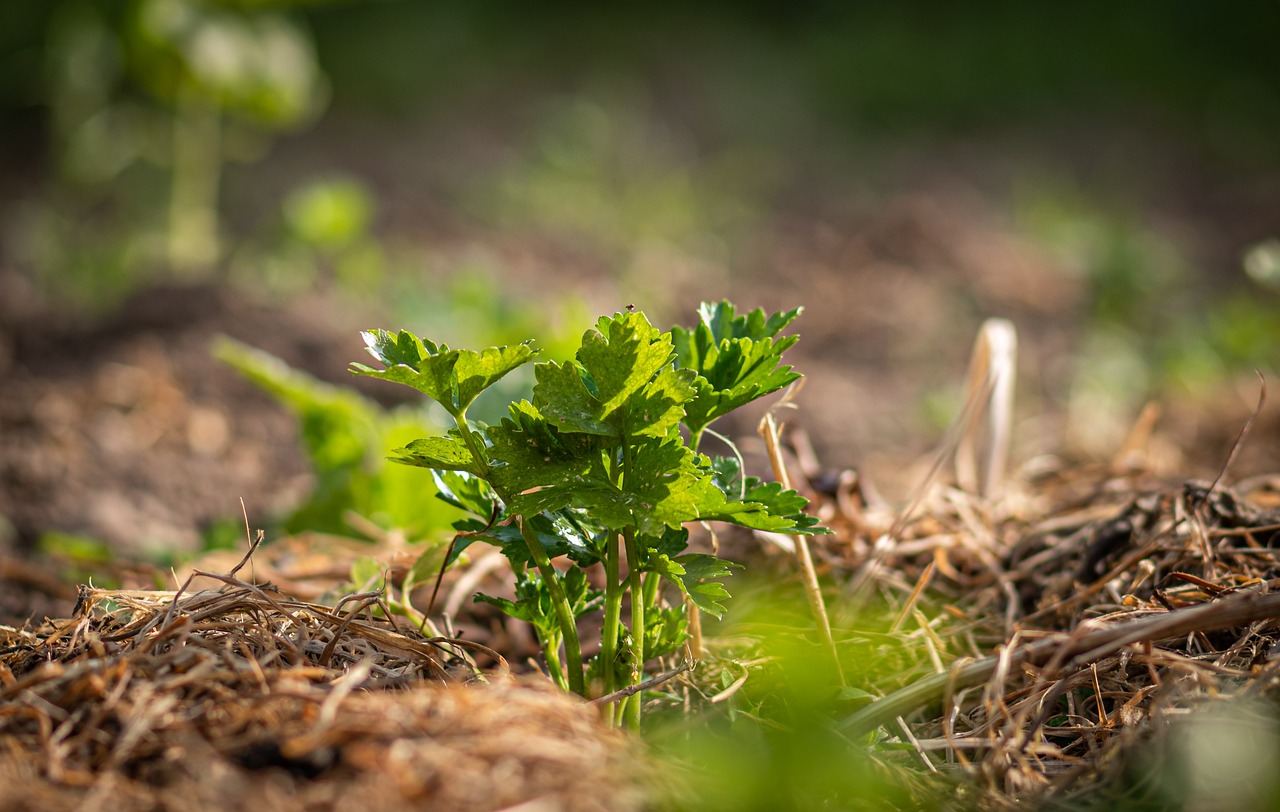
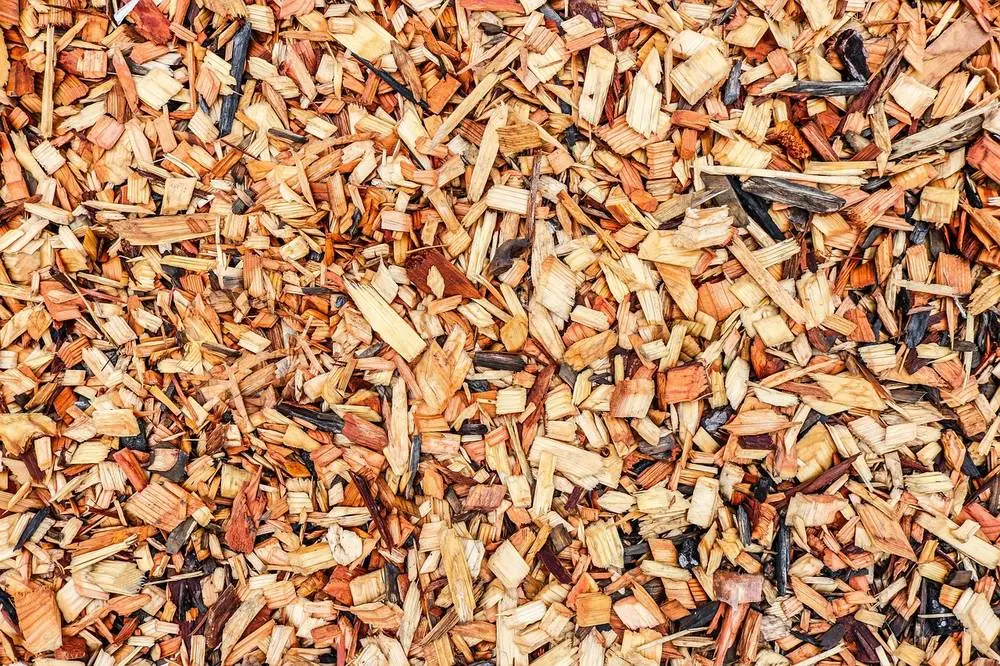
On compost, Colorado State University Extension says homemade plant-based compost is best and advises one to two inches. For wood and bark chips, the page says not to use them in the growing beds because they interfere with future seedbed preparation, adding that it takes several years for chips to decompose in Colorado’s alkaline soils. In a raised-bed garden, it describes chips as excellent mulch between the boxes, applied three to four inches deep to control weeds.
Sources differ on nitrogen. The University of Georgia circular says the high carbon-to-nitrogen ratio of wood chips requires a prior application of nitrogen fertilizer, while the Colorado page says that when placed on the soil surface as mulch, wood or bark chips do not tie up soil nitrogen. A garden soil test is covered in a separate guide on this site, and mulch choices are one of several bed-management decisions alongside companion planting.
Mulching trees and shrubs
Iowa State University Extension says wood chips and shredded bark are good choices for trees, shrubs and perennials, and recommends a depth of 3 to 4 inches around trees and shrubs.
Penn State Extension gives a narrower range in its guide for landscape trees: a 2- to 4-inch layer of organic mulch and no more, using less if the soil is poorly drained, since more than 4 inches may harm the tree’s root system. For finely textured or double-shredded mulch it advises 1 to 2 inches, because these materials allow less oxygen through to the root zone. A May 2026 Ohio State University BYGL alert, Annual Eruption of “Mulch Volcanoes”, says the mulch should be applied to a depth of no more than 2 – 3 inches.
Both Penn State and Ohio State address the trunk. Penn State says that, for tree health, all mulch should be kept away from the trunk, with the root flare (where the trunk meets the soil) allowed to show, and says to avoid piling mulch in the appearance of a volcano cone around trees. Ohio State says mulch that finds its way onto tree trunks should be pulled away from the trunk flare.
Timing and upkeep
Penn State Extension says mulch can be applied to landscape trees at just about any time of the year, and that the best time to apply mulch is in the middle of spring, once soil temperatures have warmed enough for root growth to begin.
Organic mulches break down, so they need attention. Penn State says finely shredded mulches decompose faster and require replenishing more often, and advises checking the depth before replenishing each season, noting that some old mulch may need to be removed before adding a new layer. It says applying new mulch over old mulch in successive years is the same as applying too deep a layer all at once, and that the appearance of old mulch can be refreshed by breaking up any matted layers by hand or with a rake. The University of Georgia circular says wood chips can last about two years.
At the end of the season, the University of Georgia circular says organic mulches can be tilled into the soil to further increase the soil’s organic matter content and water-holding capacity.
Cautions: termites and fire
The University of Georgia circular notes that, like bark mulch, wood chips can be a vector for termites.
On fire, a home-preparation video hosted by Oregon State University Extension features speakers from the Oregon Department of Forestry and Keep Oregon Green, who advise to regularly replace mulch around your house with non combustible materials such as crushed rock or stone and, within 5 feet of the home, to remove all plant material, living and dead. An Oregon State Ask Extension answer says wildfire experts recommend that the area within 0 to 5 feet of a home be kept free of plants and other combustible materials whenever possible. The same answer says some weed barrier fabrics are combustible and may contribute to fire risk, and that if landscape fabric is used, it should be covered by at least 3 to 4 inches of rock. This is Oregon wildfire guidance; local fire rules and the current official guidance are the place to check what applies to a given property.
Frequently asked questions
How deep should garden mulch be?
The extension pages give different ranges. For vegetable gardens, Iowa State lists 2 to 3 inches for fine materials and 6 to 8 inches for straw; for landscape trees, Penn State gives 2 to 4 inches and no more, less on poorly drained soil, and 1 to 2 inches for finely textured or double-shredded mulch.
Should mulch touch tree trunks?
Penn State advises against it. The root flare should be visible, and mulch should not be heaped into a cone around the trunk.
Which materials do extension pages cover for vegetable gardens?
Colorado State’s page has sections on grass clippings, straw, compost or leaf mold, wood or bark chips and black plastic. Iowa State’s answer lists grass clippings, weed-free straw and shredded leaves.
When is the best time to apply mulch?
For landscape trees, Penn State points to mid-spring, once soil temperatures have warmed enough for root growth to begin, and says application is possible at nearly any point in the year.