Organic pest control manages garden pests through monitoring, prevention, physical removal and natural enemies. The EPA says organic food production limits pesticides to those produced from natural sources, while the USDA organic rules also allow a specific list of synthetic substances.
This guide covers the method in practice; the wider picture of building a garden without synthetic inputs is in the guide to organic gardening for beginners, and soil amendments are covered in the guide to biochar for gardens.
What organic pest control means
The US EPA describes integrated pest management (IPM) as an approach that manages pest damage by the most economical means and with the least possible hazard to people, property and the environment. It says IPM takes advantage of all appropriate pest management options, including the judicious use of pesticides. In contrast, the EPA states, organic food production applies many of the same concepts as IPM but limits the use of pesticides to those produced from natural sources, as opposed to synthetic chemicals. The EPA adds that the same principles used by large farms can be applied in a home garden. The USDA organic regulations do allow some synthetic substances: section 205.601, as reproduced by the Cornell Legal Information Institute, lists the synthetic substances allowed for use in organic crop production, and insecticidal soaps and horticultural oils appear on that list.
Section 205.206 of the USDA organic regulations, as reproduced by the Cornell Legal Information Institute, sets out an order for certified organic crop production. It requires producers to use management practices to prevent crop pests, weeds and diseases, including crop rotation, sanitation measures and cultural practices that enhance crop health. Pest problems may be controlled through mechanical or physical methods, such as predators or parasites of the pest, habitat for natural enemies, and nonsynthetic controls such as lures, traps and repellents. Only when those practices are insufficient may a biological or botanical substance, or a substance on the National List of allowed synthetics, be applied, and the conditions for using it must be documented in the organic system plan.
Identify and monitor before acting
The EPA’s description of IPM begins with action thresholds, a point at which pest populations or conditions indicate that control is needed, and notes that sighting a single pest does not always mean control is needed. It also says that not all insects and other organisms require control, because many are innocuous and some are even beneficial. The EPA says this monitoring and identification removes the possibility that pesticides will be used when they are not really needed or that the wrong kind of pesticide will be used.
The University of California Statewide IPM Program defines monitoring as checking a site to identify which pests are present, how many there are and what damage they have caused. It says correct identification is key to knowing whether a pest is likely to become a problem.
In its Pest Notes on aphids, UC IPM advises checking plants at least twice a week when they are growing rapidly, so infestations are caught early. It also advises turning leaves over, since many aphid species prefer the underside, and looking for evidence of natural enemies such as lady beetles, lacewings, syrphid fly larvae and the mummified skins of parasitized aphids.
A note on regional scope: UC IPM states that its management suggestions are specific to pests and conditions in California, although they may be useful in other regions. For garden-specific guidance, the EPA suggests contacting a state Extension Service, which can provide a Master Gardener.
Prevention and physical controls
The EPA’s IPM description lists prevention as a first line of pest control, including cultural methods such as rotating between different crops and selecting pest-resistant varieties, and says these methods can be very effective and cost-efficient and present little to no risk to people or the environment. UC IPM’s definition of IPM adds that changing irrigation practices can reduce pest problems, since too much water can increase root disease and weeds, and that physical controls include barriers such as screens to keep insects out.
For aphids, the UC Pest Notes recommend knocking populations off by shaking the plant or spraying it with a strong stream of water, pruning infested leaves and stems, and protecting seedlings with covers. They say high levels of nitrogen fertilizer favor aphid reproduction, so no more nitrogen than necessary should be used, in a less soluble form applied in small portions through the season. They also say that protective covers will prevent transmission of aphid-borne viruses.
For tomato hornworms, UC IPM lists hand-picking or snipping them with shears, notes that natural enemies normally keep populations under control, and says that discing or rototilling after harvest destroys pupae in the soil and prevents adults from developing.
Aphids as a working example
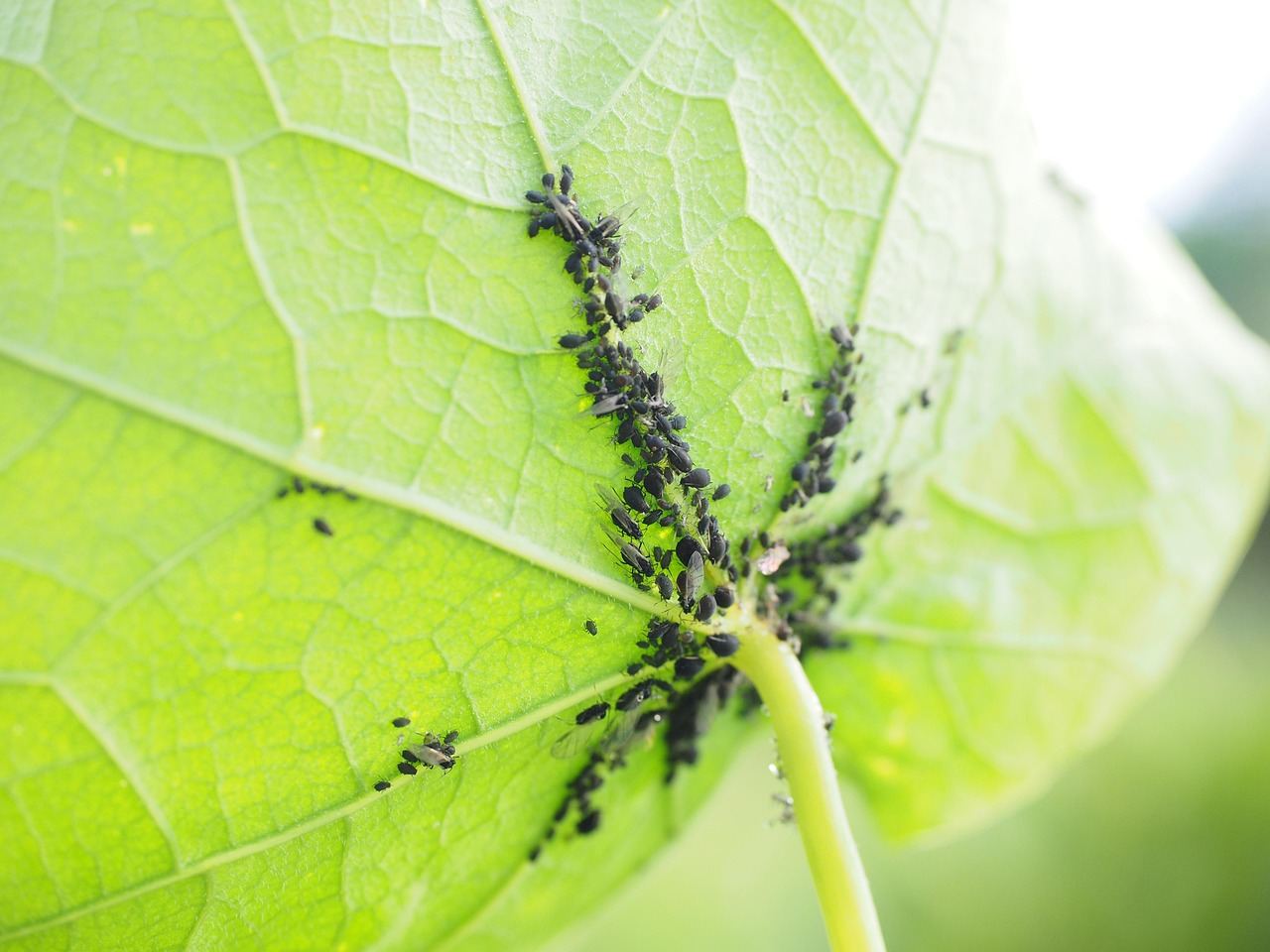
Aphids show how the steps fit together. According to the UC Pest Notes, most plants have one or more aphid species that feed on them, but feeding usually does not damage or kill established plants. Low to moderate numbers of leaf-feeding aphids are not usually damaging in gardens, although large populations can turn leaves yellow and stunt shoots, and aphids can produce sticky honeydew that attracts ants and sooty mold.
UC IPM adds that once aphid numbers are high and have begun to distort leaves, they are often difficult to control, because the curled leaves shelter aphids from insecticides and natural enemies. Where aphids are localized on a few curled leaves or new shoots, it says the best control may be to prune out those areas and dispose of them.
Encouraging natural enemies
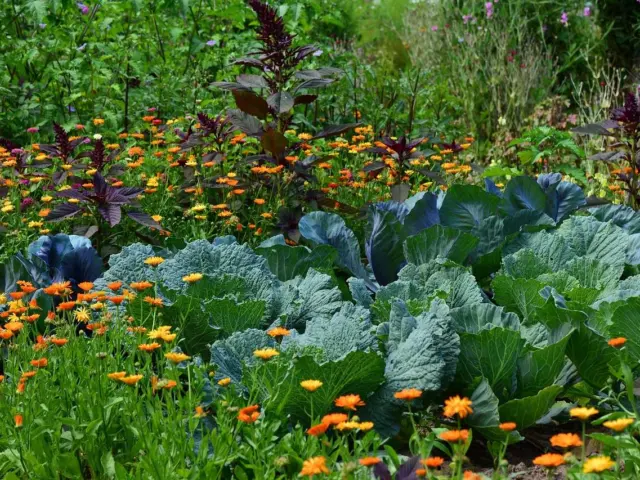
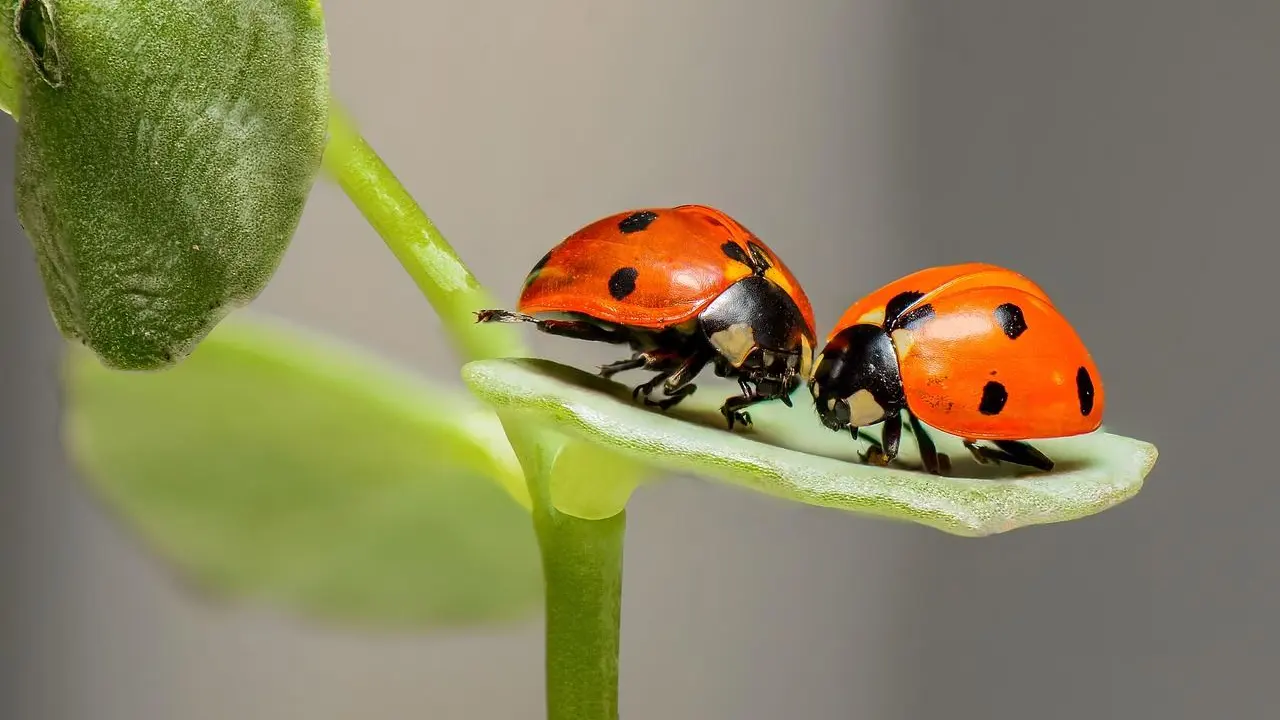
The UC aphid Pest Notes say natural enemies can be very important for controlling aphids, especially in gardens not sprayed with broad-spectrum pesticides that kill natural enemy species as well as pests. Common natural enemies of aphids include lady beetles, lacewings, syrphid fly larvae, soldier beetles and parasitic wasps. UC IPM recommends avoiding broad-spectrum insecticides that can be toxic to natural enemies and planting flowers that provide nectar and pollen to attract them. Plant pairings are covered separately in the guide to companion planting.
The same Pest Notes say ants protect aphids from natural enemies, so keeping ants off plants helps beneficial insects do their job. On buying predators, UC IPM says commercially available lady beetles may give some temporary control when properly handled, although most of them disperse from the yard within a few days. It adds that University of California research indicates high numbers are required: one large, heavily infested rose bush required two applications, spaced a week apart, of about 1,500 lady beetles each.
Products described in official guidance
Products come last in the sequence. UC IPM’s aphid guidance says to use nonchemical methods first and, if insecticides seem necessary, to choose products less toxic to natural enemies, such as insecticidal soaps and oils. The descriptions below come from Mississippi State University Extension’s guidance on insecticides for home vegetable gardens, which marks the products it considers suitable for use in organic gardens, and from UC IPM. They describe what the sources say, not instructions for any product.
- Insecticidal soaps are potassium salts of fatty acids. Mississippi State Extension says they control insects they contact by disrupting cell membranes, are most effective against soft-bodied pests such as aphids, mites and thrips, and need thorough coverage of the pest.
- Neem oil is described by the same source as a botanical product primarily useful against aphids, mites and whiteflies, again needing thorough coverage. The source says azadirachtin and neem oil both come from the seed of the neem tree but are not the same product.
- Bacillus thuringiensis (Bt) kurstaki is a bacterium that produces a compound toxic to certain caterpillars but with no effect on other insect species, according to Mississippi State Extension. UC IPM lists Bt as effective against smaller hornworm larvae.
- Spinosad is described as very effective against most caterpillar pests but not against most other types of insects, although it is also effective against thrips, leaf miners and Colorado potato beetles; the source says it is acceptable to use certain formulations in organic gardens.
- Pyrethrin provides rapid knockdown of most insects, but insects often recover and its residual activity is very short. Mississippi State Extension adds that piperonyl butoxide, often mixed with pyrethrin, is not acceptable for organic gardening.
The UC Pest Notes add conditions for soaps and oils: they kill only the aphids present on the day they are sprayed, so applications may need to be repeated; they should not be used on water-stressed plants or when the temperature exceeds 90°F; and they may be phytotoxic to some plants, so the label should be checked and the material tested on a portion of the foliage several days before a full treatment. UC IPM also says soaps, neem oil and horticultural oil can kill some natural enemies that are present on the plant and hit by the spray.
Safety, labels and organic rules
Mississippi State Extension is direct about handling: before using any insecticide, always read the label carefully and follow all label directions on personal protection equipment and on mixing and applying the product. It states that the label is the law, that insecticides are poisons, and that excessive exposure can result in acute or chronic health problems. The same guidance says to be sure a product is labeled for the vegetable being treated, to observe the pre-harvest interval, to store insecticides in a secure place where children cannot get to them, and to wash all food before preparing or eating it. Its caution list also says: “If you spill any of the insecticide on your body, wash with soapy water immediately.” It adds that all exposed skin should be washed after dusting or spraying.
On bees and other pollinators, UC IPM’s aphid Pest Notes say broad-spectrum materials such as malathion, permethrin and acephate are associated with bee kills and environmental problems, and that systemic insecticides might also harm bees and other beneficial insects on flowering plants. To protect pollinators, the same Pest Notes say not to apply imidacloprid or other systemic insecticides to plants in bloom or prior to bloom. UC IPM also lists a Bee Precaution Pesticide Ratings tool among its published resources. Mississippi State Extension’s instruction to read the label carefully and follow all label directions applies before using any insecticide.
For operations under the USDA organic regulations, the USDA Agricultural Marketing Service explains that organic operations must comply with the regulations when using substances, and that, in general, in organic crop production nonsynthetic (natural) substances are allowed unless specifically prohibited, while synthetic substances are prohibited unless specifically allowed. It adds that some substances on the National List include annotations, which are specific requirements for how an organic operation must use the substance. The synthetic substances allowed for crop production list permits those substances in accordance with the restrictions specified in that section, provided their use does not contribute to contamination of crops, soil or water. Among its insecticides it includes insecticidal soaps, horticultural narrow range oils, elemental sulfur and sticky traps and barriers, and some entries carry conditions, such as ammonium carbonate being for use as bait in insect traps only, with no direct contact with crop or soil. Regulations and the National List change over time, so the current text and a certifier’s guidance apply to any certified operation.
Frequently asked questions
Does organic pest control mean using no pesticides at all?
No. The EPA says organic food production limits pesticides to those produced from natural sources, as opposed to synthetic chemicals, and the USDA organic regulations allow a biological or botanical substance, or a synthetic substance on the National List, when other practices are insufficient.
Does every pest sighting need a response?
No. The EPA states that sighting a single pest does not always mean control is needed, and UC IPM says most established plants can tolerate aphid feeding and will outgrow damage, as set out in its aphid Pest Notes.
Does Bt harm all insects?
Mississippi State Extension explains that different species and strains of the bacterium produce different toxins, and that Bt kurstaki is toxic to certain caterpillars but has no effect on other insect species. The same guidance says to follow the label for any product.
Do released lady beetles solve an aphid problem?
UC IPM says released lady beetles may give some temporary control, and that most of them disperse from the yard within a few days. Details are in the UC Pest Notes on aphids.