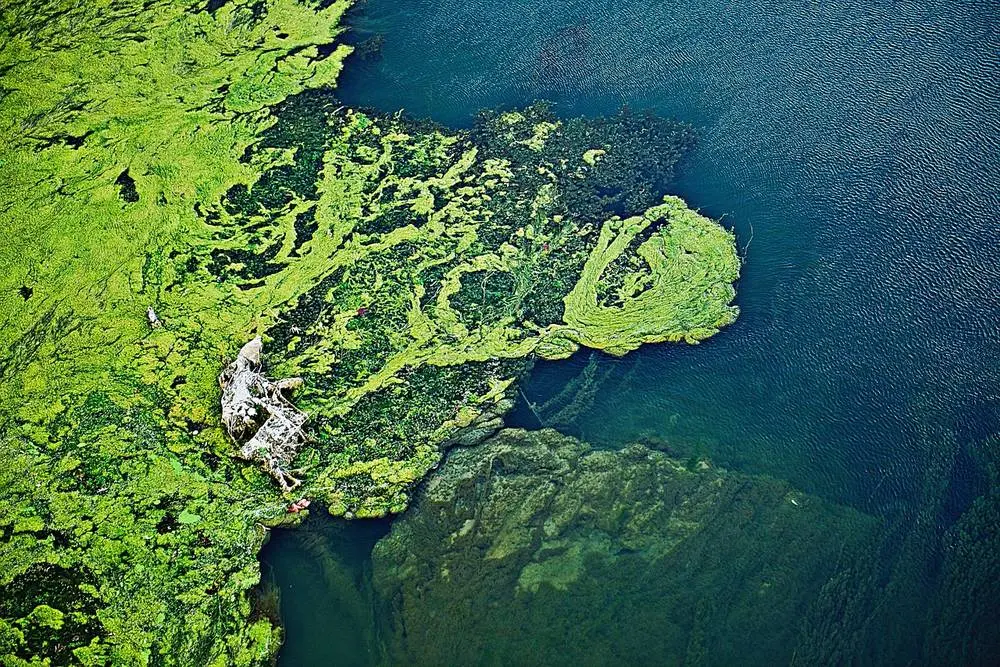
Algae carbon capture uses photosynthesis in microalgae to turn carbon dioxide into living biomass. Laboratory studies and modelling show this works, but the supply of concentrated carbon dioxide, the biology of photosynthesis and production energy all limit what it can achieve.
This page looks at the capture step in particular, while the wider picture of cultivation and conversion is set out in the guide to algae biomass energy.
Algae uptake of carbon dioxide
Microalgae are single-celled photosynthetic organisms. Like plants, they use light to drive the Calvin cycle, which a peer-reviewed study in Biotechnology for Biofuels describes as the initial pathway of photosynthetic carbon fixation. The carbon ends up in the cell as sugars, lipids, proteins and other compounds, which together make up the harvestable biomass.
Because algae grow in water, the carbon dioxide has to be dissolved in the culture before the cells can use it, and delivering it efficiently is a real engineering problem. A review of microalgal bioprocess constraints reports that in high-rate algal ponds, atmospheric exchange supplies only about 5% of the carbon required for photosynthetic growth, while conventional carbon dioxide sparging may lose 80–90% of the injected gas. The same review notes that carbonation columns have achieved a transfer efficiency of approximately 83% by extending the contact time between gas and liquid.
Uptake figures from modelling
The US Department of Energy’s Bioenergy Technologies Office addresses this in its Billion-Ton Report chapter on emerging resources. It states that microalgae require a carbon dioxide uptake ratio of approximately 2 tons of CO2 per ton of produced biomass. For the high-rate saline strain modelled in that analysis, about 1.76 tons of CO2 is fixed for every ton of biomass.
Scaled up in the same modelling exercise, the report describes algae farms that could take up 268 million tons per year of waste flue gas carbon dioxide, equal to 9.6% of the national total. The report adds, for context, that this is equivalent to the output of the nation’s 16 largest electricity generating stations. These are modelled resource estimates for a hypothetical build-out, not measured results from operating farms.
The sites in that build-out were screened hard. According to the Billion-Ton Report chapter, candidate locations had to have nearby waste point-source carbon dioxide that could be captured and transported to the site for $82.67 per ton or less, saline groundwater resources, and a long-term mean daily algal biomass productivity of at least 25 g/m2-day, resulting in 1,199 remaining sites. Those were further narrowed to 980 sites in the cost analysis when limited to a $1,000 per ton minimum biomass selling price threshold.
Modelled uptake also depends on how much of the supplied gas the algae actually absorb. The same Department of Energy chapter assumes a 75% uptake efficiency, with the remaining 25% delivered into the ponds and ultimately outgassed or otherwise not used.
The case for algae in capture research
The appeal is partly about land and water rather than carbon alone. The Department of Energy chapter lists the ability to use non-arable or otherwise unencumbered land for open-pond or closed-photobioreactor cultivation, and the ability to grow in generally noncompetitive water, including brackish, saline or other non-freshwater media such as wastewater. It also lists significantly higher growth rates and land use efficiency than terrestrial biomass sources.
Those listed advantages do not by themselves settle whether the approach is practical, which depends on the carbon supply, the biology and the end use discussed below.
Sources of carbon dioxide for cultivation
According to the Department of Energy chapter, sparged, concentrated CO2 piped in from point-source carbon capture is generally required to sustain the high growth rates needed for economic viability, although direct air capture systems are also being researched.
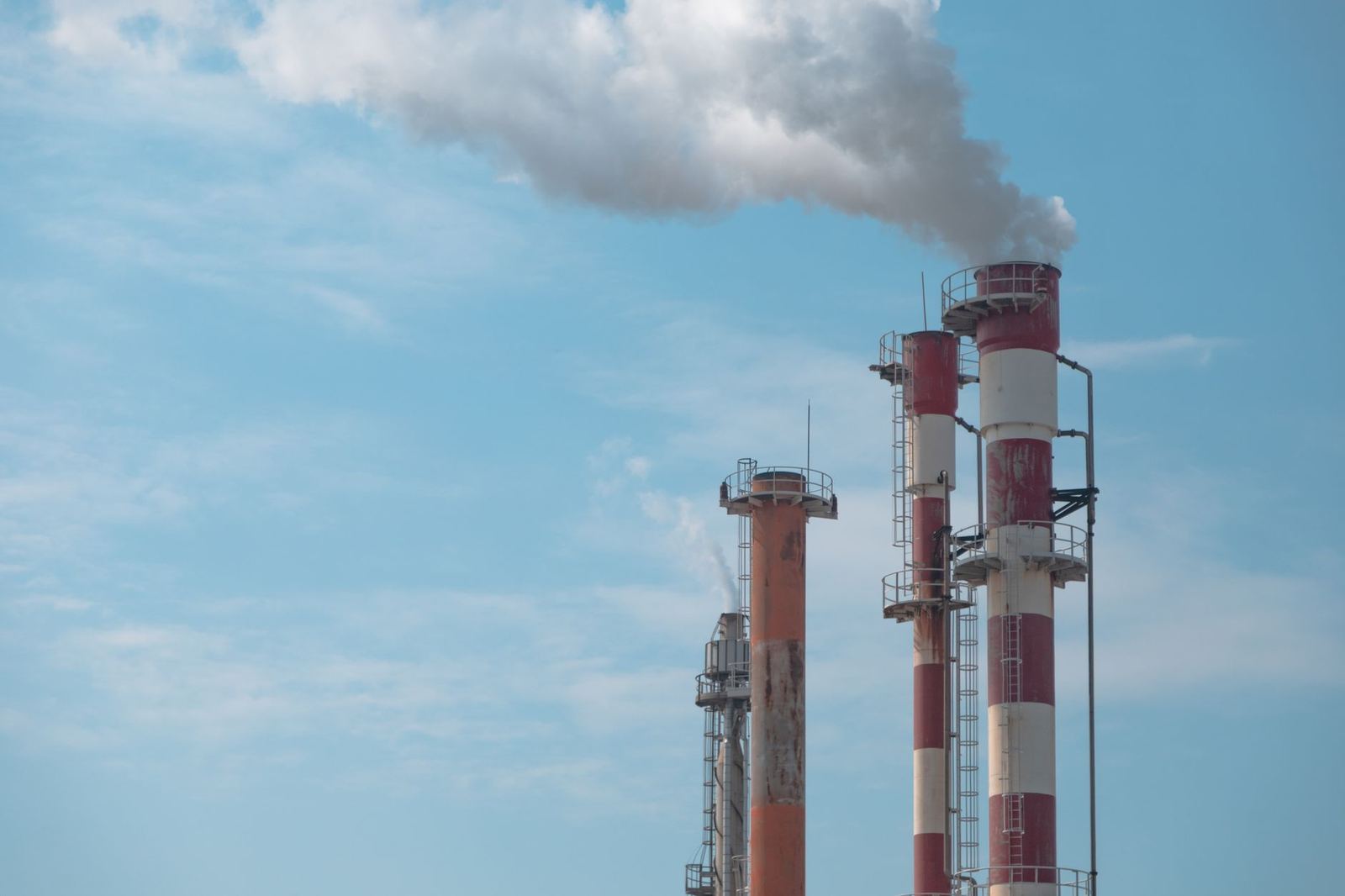
Flue gas from power plants is one such source, but it is not an easy feed. The same Department of Energy report notes that the CO2 purity in flue gas emissions is low, below 30%, and can carry impurities that make capture and purification more costly. A review of biological carbon capture by microalgae observes that most work to date has focused on concentrations below 20%, which is another reason raw flue gas is hard to use directly.
Availability is also expected to shift. The Department of Energy chapter points out that as industrial decarbonization progresses, point-source carbon dioxide may become more limited, and it suggests that direct air capture could eventually supplement or replace dependence on those sources. Under deployment scenarios for microalgae pathways, it also estimates that a range of 5% to 10% of total carbon dioxide emissions from stationary sources could be used for conversion.
Limits on photosynthesis and engineering
A basic constraint is biological. The Biotechnology for Biofuels study notes that the green microalgae-based strategy for CO2 mitigation is still in its initial stage because of the inherent, relatively low photosynthetic capacity of green microalgae. In that proof-of-concept work, adding a cyanobacterial aldolase gene to the chloroplast of Chlorella vulgaris raised the CO2 fixation rate by 1.21-fold and 1.24-fold in the two transformed lines compared with unmodified cells.
Supplying more carbon does not remove the ceiling. A review of microalgal bioprocess constraints explains that increasing carbon supply alone is not enough, because oxygen building up in the culture drives photorespiration and reduces the efficiency of carbon fixation. Reactor design therefore has to manage gas transfer and oxygen removal as well as light.
The fate of the captured carbon
Capture in algae is not the same as long-term storage. The carbon sits in the biomass only until the biomass is used, and the Department of Energy chapter frames the captured carbon dioxide as a feedstock for subsequent upgrading to fuels and products. Whether the climate balance is favourable depends in part on the energy used to grow, harvest and process it.
The same review makes the point that to significantly reduce greenhouse gas emissions, the energy used in the production process must be decarbonized, and that the environmental advantages of algal biodiesel remain uncertain. The conversion options are described in the guide to algae biofuel, and a different route for wet organic material is covered in the guide to anaerobic digestion biogas.
This page is general information about published research. Project economics, permitting and emissions accounting rules vary by place and change over time, so anyone weighing a real project should check the current official guidance and seek qualified advice.
Frequently asked questions
Can algae remove carbon dioxide from the air directly?
Algae can take up dissolved carbon dioxide from water that has absorbed it from the air, but the Department of Energy chapter says concentrated CO2 is generally required to sustain the high growth rates needed for economic viability, and direct air capture systems are still being researched.
Is algae carbon capture the same as carbon storage?
No. Algae convert carbon dioxide into biomass, which holds the carbon only until it is used or decomposes. Long-term storage would need the carbon to be kept out of the atmosphere after the biomass is processed.
Why is flue gas difficult for algae to use?
Flue gas is a dilute stream that can contain impurities. The Department of Energy chapter notes that its low CO2 purity and impurities make capture and purification more costly.
Is this an official programme or a product?
No. This is an independent informational page. It is not affiliated with any company, certifier or government programme, and it sells nothing.